
ASLMU approves spring budget, increases funding to Menstrual Hygiene Initiative and ASLMU elections
Monday, February 15, 2021

ASLMU approves spring budget, increases funding to Menstrual Hygiene Initiative and ASLMU elections
Photo: Christina Martinez
By Christina Martinez
On Jan. 24, at its first meeting of the semester, the ASLMU Senate voted on and approved a revised budget that cuts funding for in-person programs impacted by COVID-19 and redistributes them toward previously established projects.
As reported by AGENCY in November, ASLMU’s fall budget was approved under the assumption that the Spring 2021 semester would have in-person classes or at least run on a hybrid model, and ASLMU Chief Financial Officer (CFO) Isabella Ramin said that she had planned to reallocate portions of the budget elsewhere once LMU finalized their Spring instruction plans.
The approved budget proposal redistributes what remains of ASLMU’s $500,000 yearly budget toward different projects for the Spring 2021 semester.
$20,000 will be reallocated to the Menstrual Hygiene Initiative, which was launched in Jan. 2020. Prior to LMU’s shift to online learning in March, the ASLMU-funded pilot program placed period product dispensers in seven bathrooms on campus.
According to information released in the Spring 2020 semester, ASLMU’s original plan was to “conduct listening sessions and launch student surveys to collect data that will help secure funds for the second phase...a full-scale, university-funded free-product program.”
Ramin says that the increase will allow ASLMU’s program to cover more bathrooms on campus when LMU returns to in-person instruction.
“This initiative is very important to this year's administration, and we hope to expand it for when we are able to go back on campus,” she said.
Another $7,500 was appropriated towards the ASLMU Elections Committee. According to the ASLMU Elections LEO page, the duties of the committee are “to recruit candidates to run for the positions of President, Vice President and Senator [in ASLMU], as well as encourage the entire undergraduate community to vote.”
According to Ramin, these new funds will be utilized for the Election Committee’s “rebranding and [Committee] member stipends.”
The Elections Committee will have 150% more funding than previously budgeted., The revised budget comes during the Elections Committee’s recruitment period; ASLMU is currently accepting applications for upcoming student government elections.
To account for these reallocations, cuts were made to general administrative costs, the Vice President’s discretionary fund, the Senate administrative fund, and overall student programming.
“The majority of funds were cut from [ASLMU’s] in-person events that were originally planned for the Spring Semester,” said Ramin, referring to past programs such as Waiting Out Traffic.
There were no budget cuts or increases to the other discretionary funds, salaries of paid ASLMU officers, or the Student Activity Fee Allocation Board (SAFAB).
A new summarized budget breakdown of all branches and initiatives of ASLMU was provided to the Senate at the Jan. 24 meeting as follows:
Salaries & Wages - $53,500
General Administration - $32,921
President - $7,500
Vice President - $10,000
Chief Financial Officer - $150,500
Chief Communications Officer - $500
Chief Programming Officer - $188,829
Cabinet Historic Initiatives - $43,000
Senate Administration - $500
Elections Committee - $12,500
Judiciary - $250
Promises Made, Promises Kept? A midterm analysis of the Palen-Mares Administration
Wednesday, November 25, 2020

Promises Made, Promises Kept? A midterm analysis of the Palen-Mares Administration 
Illustration: Daisy Daniels
By Aaron Padilla
The 2020 ASLMU elections were an exciting time for the LMU student body. After a stiff race between three unique tickets, Jack Palen and Elsie Mares ultimately emerged victorious after winning the popular vote. Eight months after their inauguration, however, the Palen-Mares administration has seen their fair share of criticism from the LMU student body.
In October, students condemned the Palen-Mares administration and current ASLMU Senate for being unrepresentative of their interests and for tolerating prejudice within ASLMU. These allegations are a rare example of civic engagement and criticism by the student body towards ASLMU.
In the wake of LMU’s transition into an online learning environment, ASLMU had to undergo several changes to keep pace with the needs of a socially distanced student body. Shifts in policy priorities and procedures had to take place to better accommodate student needs in an online environment. The Palen-Mares administration chose to distance themselves from the roles that past ASLMU Presidential administrations have taken in the past.
The Palen-Mares campaign platform was heavily rooted in the assumption that students would return to campus in Fall 2020. COVID-19 policy only appeared twice in their campaign platform, though was mentioned at length during the ASLMU 2020 election debates. These priorities soon changed after Palen and Mares were elected into office.
As LMU made its transition into online learning in Spring 2020 and later announced that it would do the same for Fall 2020, student government needed to adapt.“In the summer, when we started to realize that there wouldn’t be any room for in-person events and that it would all be online, we had to shift goals. We realized that our [in person] priorities had to take a backseat to our ‘survival work’ and supporting students,” ASLMU Vice President Elsie Mares explained.
Elaborating on this change of approach, ASLMU President Jack Palen said, “We saw our role as being the liaison between the University administration and students.”
Despite this emphasis on student support, the Palen-Mares administration faced a notable lack of agency over university education and tuition policy. As compared to other student governments—UCLA, for example, participated in collective bargaining while discussing plans for Fall 2020 learning—the Palen-Mares administration and ASLMU Senate carried little sway over LMU Executive Board proceedings and decisions over matters such as emergency student assistance, transitioning into online learning, and tuition costs.
“ASLMU is not at all of the tables that ASLMU should be at. That was something that became very apparent over the summer,” Vice President Mares said of ASLMU’s experiences with LMU’s administration this summer. Placing student-representatives in LMU administration meetings which concern them and their title has been imperative ever since.
Over the past few months, the Palen-Mares administration has placed most of its efforts into supporting student advocacy groups as well as highlighting work by student artists and entrepreneurs. Measures such as establishing an LMU Maker’s Collective, providing support to undocumented and mixed-status students in collaboration with Resilience LMU, and reaffirming LMU’s commitment to Title IX all fall under the administration’s student support initiatives.
Migrating to an online learning environment fundamentally altered the roles and responsibilities of those in student government. As such, the Palen-Mares administration had to shift their priorities from those of past ASLMU presidents. This shift from coordinating in-person activities to student advocacy was drastic, yet needed for changing times.


Graphic: Raven Yamamoto
Analysis: COVID-19’s impact on ASLMU’s budget
By Christina Martinez
In mid-October, ASLMU released its yearly budget as per usual to remain transparent with the LMU student body but this year, there were glaring changes due in part to the COVID-19 pandemic's impact on the academic year.
For the 2020-21 academic year, ASLMU was granted $500,000, roughly a 23.5% decrease from last year’s budget of $654,000.
ASLMU Chief Financial Officer (CFO) Isabella Ramin, the member of ASLMU’s Leadership Team in charge of creating and monitoring the governing body’s financial plans, was tasked with adapting to the significant reduction in funds.
“At first, we were a little nervous because it was a $154,000 decrease,” said Ramin. “But we were working, allocating, and thinking about the budget throughout the whole summer. I feel like the way that it has been allocated now is good.”
The effects of COVID-19 and LMU’s state of virtual learning have affected the breakdown of this year’s budget in several ways. Here are some of AGENCY’s most notable findings.
Investments and notable cuts
Ramin says that her overall goal was to keep the percentages of this year’s allocations roughly the same as they were in last year’s budget, prioritizing funding for student programming. She also doubled the funding for ASLMU Initiatives, which allows ASLMU members to author resolutions, such as the recent resolution that called LMU to make future Election Days as academic holidays.
Ramin says that ASLMU President Jack Palen and Vice President Elsie Mares “ran on a campaign wanting to prioritize initiatives that benefit the students,” and that through prioritizing student programming, ASLMU “ still wanted to foster community and provide events that help new and continuing students feel the sense of the LMU community.”
Though most of ASLMU’s investments remained intact, there were a handful of divestments. The ASLMU Election Committee’s voting system budget, the New York Times (NYT) subscription that made NYT free to all LMU students, and the Wellness Wednesdays Farmer’s Market were completely cut. saving ASLMU $26,500. Certain initiatives and programs received slight budget cuts, such as First Amendment Week and LMU’s holiday traditions, the latter of which cannot be planned due to the pandemic and a closed campus.
Salaries
Yearly salaries for the members of ASLMU’s Leadership Team remained largely the same, except for the ASLMU President. According to the new budget, the ASLMU President is traditionally paid a stipend of $2,000 for their work in the summer, but current ASLMU President Jack Palen was not compensated this year. This leaves Palen eligible for a total salary of $8,000 for his term, instead of his predecessors’ salary of $10,000.
President Palen says the ASLMU President regularly begins work during the summer to plan for the upcoming semester and to prepare training for ASLMU’s members. Although he was still eligible for the stipend, he chose to reject it.
“I thought the funds would have been of better use elsewhere in the budget,” said Palen. “While that work still filled my summer, I found the stipend was unnecessary.”
Other salaries have been cut in half. The positions of Elections Chair, Photographer, and Videographer have only been allocated $1,000 instead of $2,000 in the 2019-2020 academic year. The only position that received a raise is the Speaker of the Senate, which was an unpaid position until 2019. The salary of the Speaker of the Senate increased from the initial stipend of $2,000 to $3,000.
Student Activity Fee Allocation Board (SAFAB)
One of the largest concerns for this year was the allocation of funds for the Student Activity Fee Allocation Board (SAFAB) that provides financial assistance for registered student organizations (RSOs) that apply for it. SAFAB funding is usually applied for and exhausted by mid-semester due to its high demand.
The SAFAB reserve is always 20-30% of ASLMU’s budget. According to the current budget report, ASLMU has allocated $110,000 to SAFAB, or 22% of its budget. This is a 26% decrease from the $150,000 that was available to RSO’s in the 2019-20 academic year.
While Ramin prioritized SAFAB in this year's budget, she has observed that the demand for it is significantly lower than it had been last year when she served as the assistant to the previous CFO. By the midpoint of the Fall 2019 semester, SAFAB had run out of funding. This year, only half of the funds have been applied for.
“$44,000 is available this fall, and only $21,000 has been applied for,” said Ramin. “I would definitely say that engagement with SAFAB funding has gone down, but whatever is left over [from] this semester will be available next semester.”
Spring semester plans
According to Ramin, the budget was finalized when there were plans to hold certain events in-person in Spring 2021. Annual spring events such as the Spring Concert and LMU Day have been allocated funds similar to last year. There is also a distinction between “Fall Virtual Programming” and “Spring Programming.”
Ramin says that the current budget allocations will likely be altered. The budget was planned and approved by the ASLMU Senate under the assumption LMU would be able to reopen campus and allow in-person programming in the spring. If the budget needs reallocation, a new budget plan will be created and proposed to the ASLMU Senate for approval.
“Obviously, completely normal is not going to be possible in the spring,” said Ramin. “[The Leadership Team] is working to reallocate and readjust in response to whatever LMU has planned for next semester in terms of in-person or virtual.”
ASLMU Senate passes resolution, calls on LMU to make Election Day an academic holiday
Tuesday, October 27, 2020

 |
| Photo: Kelly Hebestreit |
ASLMU Senate passes resolution, calls on LMU to make Election Day an academic holiday
By Christina Martinez
ASLMU has passed a resolution encouraging LMU to make future Election Days as academic holidays at the Oct. 18 Senate meeting.
Penned and presented by Senator for National Collegiate Athletic Association (NCAA) and Athletics Bailey Woinarowicz, the resolution calls on LMU to “ensure that there will be no classes held on Election Day to allow students and faculty to participate in our civic duty to our Democracy and vote.”
In her resolution, Woinarowicz cited an article that reported only 48.3 percent of college students voted in the 2016 presidential election as one of her main reasons to write the resolution. She believes that more students would vote if course attendance and workload was not an issue, particularly at LMU.
“I was told for [the midterm election] in 2018, LMU students had to wait 2 hours to vote,” said Woinarowicz. “Just making sure that there’s no classes on Election Day would be crucial because students won’t have to worry about missing class, [and] they can volunteer to work the polls. If they have to vote in-person...[i]t just relieves so much stress knowing you don’t have class on Election Day and that you can vote whenever it fits your schedule.”
Woinarowicz also listed universities with existing Election Day holidays in the resolution, including Jesuit universities such as Fordham University and College of the Holy Cross, and referenced a recent NCAA ruling that declared that Division I athletes would have Election Day off from practice and games to allow athletes to vote.
Woinarowicz also included a quote from Pope Francis in 2013 as an epigraph, where he declared that Christians should actively participate in politics and pray for leaders that govern well, saying that “[a] good Catholic meddles in politics,”to connect the resolution with LMU’s Catholic and Jesuit values.
“I worked with the Center for Service and Action and Gabi Jeakle [to tie in] our university’s mottos and what [it] says that graduates of LMU should be like,” she said. “I feel like our university should hold it up.”
In a post from Woinarowicz’s Senator for NCAA and Athletics Instagram account, she shared a copy of the resolution and expressed excitement for its passing in the Senate. She credited Jeakle and former Senator for NCAA and Athletics Taylor Pajunen for assisting her with wording and proofreading, respectively.
“I’m just utilizing my position to try and get this moving, and to get the university to recognize this as an important issue,” said Woinarowicz. “I know that there have already been efforts, but… it should have already been a thing!”
Woinarowicz hopes that because of it will recognize ASLMU’s passing of the resolution as legitimate and act upon it. She pointed to LMU’s recent voting campaigns, such as #ListenEngageVote, as evidence that LMU’s administration cares about students’ interest and ability to vote.
“LMU has done so much to encourage students to vote,” she said. “But now, LMU needs to take that next step and make Election Day an academic holiday.”
ASLMU’s passing of this resolution comes during a contentious presidential election year as the latest of many student voting initiatives they’ve put forth to urge Lions to vote. In past election years, ASLMU has used booths on Palm Walk and free swag to incentivize students to vote while promoting LMU’s TurboVote link. TurboVote is a digital hub for voter information used by universities where students can easily check their voting registration, register to vote if they haven’t already, and get help voting by mail in their state.
Despite the virtual limitations of this semester, Chief Programming Officer (CPO) Brion Dennis has taken charge of organizing ASLMU’s voting initiatives. In addition to promoting TurboVote as a resource, they have helped organize phone banks to contact students directly and encourage them to register to vote for municipal, state and federal-level elections.
"Through the phone bank, we contacted around 50 percent of the junior class and around 70 percent of the sophomore class,” said Dennis. “That phone bank ended up with more than 200 students registered to vote by the end of the day.”
Dennis believes the 2020 election will be one of the most important elections of our lifetimes and that it is imperative that students exercise their right to vote now more than ever. They pointed to how 70 million young Americans comprise almost a fifth of the electorate and have the power to swing the election.
“Promoting young voters to go out, to cast their vote, to recreate our government in the image of what the future will be like at this point in time, this election is the most crucial...because we will all grow up into the world that this next administration makes,” they said.
Listen to Addendum 2.3: Letting Your Vote Roar to hear Brion Dennis, Chief Programming Officer of ASLMU talk about their leadership with student voting initiatives to mobilize students and make history as we vote in the most important election of our lifetime. Hosted by Raven Yamamoto.
ASLMU votes to impeach senator after contentious hearing, witnesses say “the damage has been done”
Monday, October 12, 2020


ASLMU votes to impeach senator after contentious hearing, witnesses say “the damage has been done”
By Raven Yamamoto, Danica Creahan
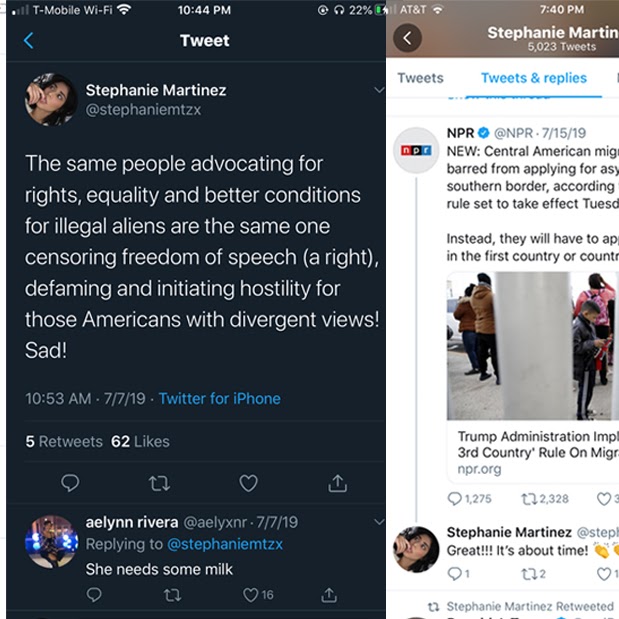
The ASLMU Senate has voted to impeach Diversity and Inclusion Senator Stephanie Martinez on the grounds that her actions have “severely damaged the integrity or authority of ASLMU or the office held by the individual in question.” Martinez is the first sitting senator to be impeached in ASLMU’s history.
The vote passed by an overwhelming majority. 18 senators voted in favor of impeachment, two abstained and one voted against. Over 100 LMU community members were in attendance at the highly-anticipated hearing that lasted three hours before the announcement of the verdict.
Martinez’s fellow Senator for Diversity and Inclusion Camille Orozco brought the complaint against Sen. Martinez on Oct. 4 following the circulation of a petition to remove Sen. Martinez from office. The anonymous petition was created after Martinez’s past social media posts containing anti-immigrant rhetoric came to the attention of the LMU community.
“Seeing the amount of student dissent I found it necessary to come forward with the impeachment complaint,” Orozco said. “It was a difficult decision, but uplifting the interests of the student body has always been my top priority with my role [in the Senate].”
Freedom of speech
Multiple media organizations outside LMU have deemed the impeachment an issue of free speech. In her opening statement, Sen. Orozco clarified the grounds for the complaint against Sen. Martinez.
“I would like to remind everyone that this is not a trial regarding freedom of speech, expression, or political affiliation, as those rights are protected in the United States Constitution, as well as the non-discrimination policy in ASLMU’s constitution,” Orozco said. “This hearing is one regarding conduct which has severely damaged the integrity, or authority of ASLMU or the office held by Senator Martinez.”
Regardless of Sen. Orozco’s clarification, freedom of speech remained the sticking point for Martinez and the witnesses who testified in her defense.
“Despite what was stated, that this is not about free speech or political identity, I argue that this is not the case. The impeachment case against me was brought forward as a result of the Loyolan article and subsequent petition in response to my creation of the students for Trump Instagram page,” said Sen. Martinez. (The petition referenced in her opening statement was created months prior to the Loyolan’s article).
In response to our request for comment, Kennedi Hewitt, author of the Loyolan article, stated, “I reported accurately, fairly, and I upheld the standards of the Loyolan.”
Sen. Martinez continued to claim that the impeachment complaint was an attempt to silence her conservative beliefs. This point was reiterated by Will Donahue, Scott Meyers, and Drew Alcorn, the three witnesses she called in her defense.
“I think a lot of what conservatives stand for is freedom of speech, and I believe that this is entirely a free speech issue,” said Meyers. “I see people being affected or harmed by an opinion.”
“Stephanie is the only openly conservative member of ASLMU, and she's blatantly under attack for essentially political comments and the fact that people didn't appreciate those comments,” said Donahue, “I think this is just further evidence that a lot of people view conservative views as just incompatible with ASLMU.”
“She's elected to represent the students on campus, and conservative students are students on campus, and I don't feel that they are accurately represented within ASLMU,” said Alcorn.
During the hearing, Sen. Orozco confirmed via Alcorn that LMU’s chapter of Young American’s for Freedom (YAF), an “ideologically conservative youth activism organization,” had received funding from ASLMU through the Student Activity Fee Allocation Board (SAFAB).
While speaking on how Sen. Martinez’ behavior has impacted ASLMU’s relationship with the student body, ASLMU President Jack Palen argued that Sen. Martinez’ response to the impeachment complaint created further damage to ASLMU’s reputation.
“If you can't hold the elected officials accountable, what's the point of elections? What's the point of a government if students aren't represented in the spaces where they would like to be?” said Palen. “Instead of adjusting the behavior, [it] seemed to me that Senator Martinez doubled down on it, and effectively alienated the students who were criticizing her as well.”
Sen. Martinez maintained that the senate was targeting her conservative views steadily throughout the hearing.
“This impeachment is a sham, this was a kangaroo court and conservative students on campus are furious,” said Martinez. “This is a case of discrimination and xenophobia towards conservatives and we will have their voices heard. So I want to ask you, how will you represent conservative students on campus?”
Martinez notably used the expression “kangaroo court,” an expression also used by President Donald Trump in October 2019 regarding his own impeachment.
I would love to send Ambassador Sondland, a really good man and great American, to testify, but unfortunately he would be testifying before a totally compromised kangaroo court, where Republican’s rights have been taken away, and true facts are not allowed out for the public....
— Donald J. Trump (@realDonaldTrump) October 8, 2019
Immigration
Given the nature of her social media posts, Sen. Martinez was called to clarify her stance on immigration. Prior to the hearing, she had not clearly stated where she stood on the issue.
In her opening statement, Martinez explained that she came from a family of immigrants and that she supported those who migrate to the U.S. legally. “To be anti-immigrant [would] be to be against my own immigrant parents who migrated here at a young age,” Martinez said.
Brisa* was called as a student witness and shared how she’d confided in Martinez, her first friend at LMU, about her immigrant status. Brisa expressed her shock when she learned about Martinez's past social media posts, using the phrase "illegal alien" to describe undocumented people.
“She was like the only person that I felt like I could trust,” she said. “The fact that someone doesn't even know the proper words [for] how to describe someone like me… I can't trust ASLMU with someone like that at the forefront.”
Martinez strongly defended her use of the term “illegal alien” in her past tweets, citing it as a legal term, and said she was only against illegal immigration. In response to questions about her tweet celebrating Trump’s asylum regulation law, she argued that the law did not end asylum but instead “prioritize[d] the most vulnerable asylum seekers [in] extreme cases instead of those who were only seeking monetary gain in the U.S.”
Another student witness named Leonardo* shared an emotional story at the hearing about how his family brought him across the border for his safety. He explained that while he didn’t agree with Martinez’ politics, her comments celebrating a law that heavily regulated asylum made him uncomfortable.
“When it became an issue to me was when I found out that she was supposed to represent my best interest when she doesn't even support my presence on campus or in this country,” he said.
“Knowing that someone [who’s] supposed to represent me is very supportive and even willing to be someone that sees me behind a metal gate and sees me without access to clean water as ICE often does to detainees,” furthered his discomfort.
Leonardo also added that while “the damage has been done” by not pursuing impeachment sooner, removing Martinez from office would be a “good start” in rebuilding trust between ASLMU and its constituents.
In response to a question from Sen. Alexis Harris regarding how Martinez thinks her statements have impacted survivors of genocides and students of mixed citizenship statuses, Martinez offered a personal anecdote.
“My uncle was actually placed in one of the cages as well, when he was crossing [the border] illegally.”
Desiree Diaz, a long-time member of Resilience, a student immigrant rights activist group, was also called as a witness. She explained that seeing Martinez on the senate months after her past tweets resurfaced “completely severed [her] faith in ASLMU being dedicated to helping our undocumented community on campus.”
LGBTQ+ Issues
Multiple senators also questioned Sen. Martinez about how a retweet in which the tweet’s author stated they would not support LGBTQ+ history being taught in public schools.
“So ‘including but not limited to,’ so I don't necessarily...” Martinez appeared to struggle to respond, and then proceeded not to answer the question the first time it was posed.
When another senator followed up, Martinez admitted it was a question of how she was raised.
“I was raised Catholic, full-blown Catholic girl,” said Martinez, “I was raised within a Mexican household, that's not appropriate… it's a tradition in my family and I can’t break that tradition.”

After some WiFi troubles, Martinez made a clarifying statement that LMU’s LGBTQ+ community “would have” her support.
In her clarifying comments following Sen. Martinez’ statements regarding the LGTBQ+ community, Sen. Orozco reminded all in attendance of the role of a diversity and inclusion senator.
“The responsibility of a senator of diversity and inclusion is to ‘represent the very needs and issues related to identities, including but not limited to, gender, sexual orientation, culture, disabilities and neurodiversity.’ This means that a senator in this position is responsible to represent the identities of those, including gender, sexual orientation, culture, disabilities and neurodiversity, it does allow for more than that but it must represent at the very minimum those students,” Orozco said.
Closing statements
In Sen. Orozco’s closing statement, she restated the intent of the impeachment complaint. She doubled down on her case that Sen. Martinez violated ASLMU bylaws, and reiterated her firm belief that the impeachment was not due to political beliefs or about freedom of speech.
“There is value in ideological diversity, and in fact, it is this diversity that I believe makes ASLMU so strong. Whether you're a liberal, moderate or conservative, that does not give you a pass from being held accountable by your peers when you actively alienate and disparage vulnerable student communities.”
In Sen. Martinez’ closing statement, she reaffirmed that she believes “diversity and inclusion” includes diversity of political ideology and that she didn't feel responsible for representing undocumented students at LMU.
“My position specifically says identities including but not limited to, which implies that the senator for diversity and inclusion must represent those that have different political identities. This includes those that identify as conservative. My role does not say anything about representing those with illegal citizenship status. Citizenship is not an identity, it is a legal status.”
What’s next
Sen. Martinez has until Oct. 18 to appeal the impeachment vote and have it reviewed by ASLMU’s Judicial Board. If she does not appeal, the Senate will vote on Sen. Martinez’ removal that day, bringing an end to the three-week-long impeachment proceedings.
*This student will not be named in full for their safety.

 |
| Graphic: Raven Yamamoto |
Embattled ASLMU Senator faces impeachment and ousting from immigrant spaces
By Raven Yamamoto, Danica Creahan
In Nov. 2019, the Coalition for Humane Immigrant Rights (CHIRLA) and the California Dream Network (CDN) held its yearly retreat for undocumented people, DACA recipients and their allies in Monterey Bay. Over 50 people came ready to plan how their community could take action in preparation for the 2020 election when America will decide whether or not to re-elect a president well-known for anti-immigration policies.
In attendance at the three-day CHIRLA retreat was then-sophomore LMU student Stephanie Martinez. A newcomer to the group, she was invited by CHIRLA organizer Melody Klingenfuss after attending a CHIRLA event in defense of DACA. Martinez got involved with the organization through her Gender and Society: Immigration and Reproduction class.
Martinez is now under scrutiny due to her position in LMU student government as ASLMU senator for Diversity and Inclusion. This Sunday, she will become the first sitting ASLMU senator to face impeachment proceedings. In May of this year, fellow senators discovered past tweets from her personal account that included anti-immigrant rhetoric.According to ASLMU Bylaws, Martinez’s position is designed to “represent the varying needs and issues related to identities including, but not limited to, gender, sexual orientation, culture [and] disabilities.”
There are at least 20 undocumented students at any given time in the LMU undergraduate student body, though the actual amount is likely higher due to underreporting for fear of reprisal. This includes potentially undocumented students and DACA recipients. LMU is also part of the Ignatian Solidarity Network (ISN), a network of Jesuit schools and universities in the United States committed to social justice, including the protection of DACA and their undocumented students.
When Martinez ran for Diversity and Inclusion senator in April 2020, she listed volunteer work with CHIRLA as part of her platform and mission statement. When asked about the nature of her work with the organization for Agency’s May 2020 article on her unearthed anti-immigrant social media posts, Martinez said she had gone to events held by CHIRLA to “bring attention to the unjust measures Trump was pursuing to end (DACA).” Martinez further stated that her work with CHIRLA had “motivated me to use my privilege to advocate for immigrant rights” and that her old tweets did not reflect her current view on immigration.
Despite Martinez’ assertion in May that her views on immigration rights no longer aligned with her previous tweets, last month Martinez became the president of LMU’s Students for Trump, a pro-conservative, pro-Trump student group with high school and college chapters across the country. Students for Trump, which started as a social media campaign, is a project of Turning Point Action, a sister organization to Turning Point USA, a nonprofit famously run by conservative activist and influencer Charlie Kirk.
In a commentary piece, Kirk published his list of priorities on immigration policy: “building the wall as a first priority; ending birthright citizenship; establishing English as the official language of the United States; ending chain migration and the visa lottery; lowering overall legal immigration levels; and dramatically increasing enforcement of E-Verify and visa overstays.”
Martinez refused our request to comment on LMU’s Students For Trump chapter or her leadership of the group.
Bella Brown* a member of CHIRLA who has asked to remain anonymous, says she was approached by Martinez during the retreat to participate in a documentary video that Martinez described as “a school project.” According to Brown, Martinez wanted to film undocumented folks, DACA recipients and those of mixed statuses talking about their lived experiences and why it was important that DACA be reinstated.
Brown says she agreed to be filmed and spoke about about her status and experience as an undocumented person on camera. She says she did so with the intent of supporting Martinez, who had introduced herself as an LMU student and ally to the Los Angeles immigrant community. Brown says she exchanged contact info with Martinez but never heard from her about the final product for class or otherwise.
At the time of the CHIRLA retreat, Brown thought nothing about working with a self-described immigrant advocate and LMU student on her class project. Brown grew concerned, however, when she learned in August of the petition calling for Martinez’ impeachment and the anti-immigrant social media posts the LMU Senator made that were dated just months before the 2019 retreat.
“We were all under [the] assumption, you know, [of a] safe space, everyone here is either undocumented or previously undocumented or an ally,” she said.
Brown explained that she wasn’t worried for her own safety, but rather the safety of others whom she says Martinez filmed despite their vulnerable statuses as undocumented immigrants.
“I've come to the point where I feel comfortable telling my story, you know?” she said. “ I was just worried for folks [for whom] it was basically their first time ever sharing their story.”
Martinez says the video she captured was intended to be individual subjects sharing a few words on what DACA meant to them, and that she later showed it to her Gender and Society class.
“Students were replying like ‘hope’ and like giving just one-word responses…” Martinez explained, “I showed it to the class and soon after, I deleted the video.”
Multiple students in that class said they don’t recall seeing a video presented by Martinez. Dr. Borgia could not recall whether or not a video was presented.
A DACA recipient who also participated in Martinez’ documentary video project said he became fearful after seeing the petition made against her and the pro-Trump posts of hers.
“A lot of us who were recorded were very scared to know what she was going to do with that information,” he said. “We saw that she made some comments that were very anti-immigrant and we were afraid for our families and our statuses because we exposed ourselves to her.”
While working with CHIRLA, Martinez received credit for the course, Gender and Society: Immigration and Reproduction, taught by Dr. Danielle Borgia. The course had a focus on immigration and Latin America. For their final project, students could either do a research project or perform community service with a variety of organizations and share with the class what they learned from the experience. Both project options were required to be delivered as speeches, and did not call for the use of video, because the course had an oral skills flag.
Dr. Borgia says, after working with Martinez closely and seeing her speak so passionately about immigrant rights during class, she was shocked to learn about her student’s past social media posts.
“I just feel awful that undocumented people who opened up to someone who's supposed to be an ally and who's volunteering on my behalf, for an organization that is dedicated to helping immigrants ... feel that they're afraid that they might be outed or something,” Dr. Borgia said.
A Snapchat post made by Martinez while attending her first CHIRLA rally less than a week before the retreat, shows her holding a sign that says “Rise up for DACA!” It was a gathering to help send off a delegation of the nonprofit’s members to Washington D.C. for the Supreme Court’s hearing of DACA set for Nov. 12.
The caption on Martinez’s post reads, “when classes force you to go [to] events you disapprove of ... #facade.” Martinez declined to comment on the image.
Despite the apparent disapproval of CHIRLA by Martinez in the Snapchat post, during CHIRLA’s retreat, Martinez ran for a position on the California Dream Network’s “steering committee,” an executive board that leads CHIRLA’s work for immigrant rights. Anyone in attendance at the retreat could run for a position if they gave a speech. Martinez spoke to the crowd of over 50 people about wanting to one day be an immigration attorney, but was not elected by her peers.
Dr. Borgia explained that she never required students to attend events such as the CHIRLA rally shown in Martinez’s Snapchat, and that she only offered extra credit for those who attended them voluntarily. She also emphasized that she gave students an exhaustive list of volunteer opportunities, many of which had nothing to do with immigration.
Sandy Gonzalez, a permanent resident who was formerly undocumented, was also filmed by Martinez, and explained that her biggest concern after learning about the senator’s previous tweets was how Martinez had, in her view, “infiltrated a safe space for undocumented people knowing that it was a safe space” where people could speak freely without fear of deportation, imprisonment or other retaliatory actions.
“I know how scary it can be to open up [about your status] and then imagine finding out later that one of the people that you opened up to [has] these ideals that go against your very existence,” she said. “It just feels like a violation.”
CHIRLA organizer Melody Klingenfuss did a presentation in Dr. Borgia’s class about the organization as a place where students could volunteer their time. She worked closely with Martinez during her time at CHIRLA, but says Martinez is no longer welcome in their spaces after the organization learned about the Senator’s past tweets and the videos that Martinez filmed of her students. As the main organizer of the 2019 retreat and the person who invited Martinez, Klingenfuss feels responsible for the undue stress caused to her students. Klingenfuss says she encourages Martinez to volunteer her time elsewhere.
“I can't even put into words how it makes me feel that this place was potentially put in an unsafe situation by this individual,” Klingenfuss said.
ASLMU will vote Sunday on whether or not to impeach Martinez after hearing her case in which a “misleading representation of her involvement with CHIRLA” is listed on the impeachment complaint made against the senator alongside “public statements” made by her.
*This person has requested to remain anonymous.
DISCLAIMER: Robyn De Leon, the co-author of the May 2020 article, is the Director of Free Speech in ASLMU and was called by Diversity and Inclusion Senator Camille Orozco to testify in Martinez’ impeachment case this Sunday. Due to the nature of De Leon's position, his attendance is mandatory. Raven Yamamoto, the other co-author of the original article and this article, was called to testify but declined due to their ongoing reporting on the impeachment proceedings that create a conflict of interest.


Social Icons