

 |
| Photo: Gabriella Jeakle |
ASLMU Senator Resigns “With Great Pleasure”
By Danica Creahan, Raven Yamamoto
In a letter to the ASLMU Senate, Diversity and Inclusion Senator Stephanie Martinez officially resigned from her position on Sunday “with great pleasure and elation,” bringing an end to the saga of the first-ever impeachment proceedings to take place against a sitting ASLMU senator.
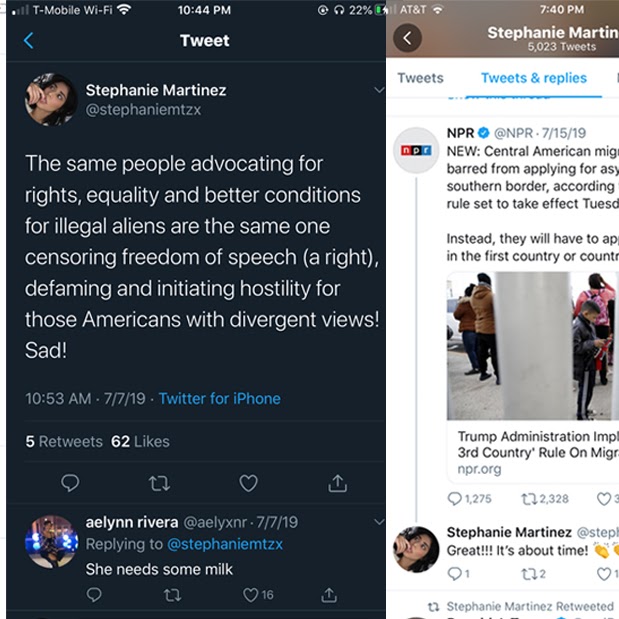
In October, the Senate voted to impeach Martinez after a complaint was brought against her regarding anti-immigrant tweets she had made that were believed to “severely damage the integrity or authority of ASLMU,” after she was elected on an apparently pro-immigrant platform. The event prompted political discourse about the ethics of her impeachment among students and media outlets alike. A pro-immigration nonprofit came forward to oust Martinez from their spaces. In November, the Judicial Board overturned her impeachment, levying sanctions against her that were later invalidated due to an interpretation of ASLMU’s Bylaws.
In the now-former senator’s letter, which was read aloud during ASLMU’s weekly meeting on Dec. 6, Martinez explained the reasoning behind her resignation, namely that she has obtained “a prestigious position for a nationwide organization,” and that she would be working with “notable people.”
“I’ll be working with the RNC,” Martinez told Agency, referring to the Republican National Committee. Back in November, however, Martinez told The College Fix that her new position was, “a vice-chair seat in the Republican National Hispanic Assembly for all of LA County.”
“Considering how invested AGENCY is in my life, that’s enough information I’ll give [sic]. I would also like to thank AGENCY for enabling me to become more vocal ever since their failed attempt in trying to ‘cancel’ me.”
In her letter, Martinez also acknowledged forces she felt had been working against her throughout this semester, including fellow Diversity and Inclusion Senator Camille Orozco and the student government as a whole.
“I give credit to Camille for listening to the students at LMU in regards to my seat. ‘A’ for effort, your attempt to remove me was unsuccessful,” the former senator wrote.
Sen. Orozco, who originally brought the impeachment complaint against Martinez in October, told Agency that she felt relieved upon learning of Martinez’ resignation.
“I understand that she had been given a position to represent Conservative Latinos, and I wish her the best of luck with her work for that organization. Moving forward, I am excited for ASLMU to repair our relationship with student groups who have been marginalized by Senator Martinez’ position on Senate,” Orozco stated.
Speaker of the Senate Kyle Saavedra, who read Martinez’ letter aloud to the Senate on Sunday, feels that the email accompanying her letter was immaturely worded and called into question why Martinez had waited so long to resign.
“The letter of resignation is just a clear attempt to ruffle feathers on her way out, which in reality, just made her look like a hateful person that never respected the office she held, to begin with,” said Saavedra. “I am more than happy that she is off of ASLMU and that we can now fill the Senator for Diversity & Inclusion position with somebody who actually respects that position and cares about initiatives geared towards advocacy and education.”
Read Agency’s full transcription of Martinez’ resignation letter, read publicly by Speaker Saavedra at the Dec. 6 ASLMU Senate meeting:
When asked for comment, ASLMU Attorney General Leslie Sepulveda said she is“looking forward to the position being filled by someone who recognizes and works for the needs of historically disenfranchised communities,” and that she will happily meet with candidates interested in filling Martinez’ seat.
ASLMU President Jack Palen expressed his desire to move forward with other various initiatives and continue serving the student body.
“I’m excited to continue working with my peers in the Senate, who just passed three great resolutions,” said Palen. “We in ASLMU are beginning to look inward to see how we can make the organization better prepared for accountability when individual members fail to uphold our values.”
ASLMU Bylaws Invalidate Sanctions Against Diversity and Inclusion Senator, Executive Board Will Not Enforce
Monday, November 23, 2020


Photo: Gabriella Jeakle
ASLMU Bylaws Invalidate Sanctions Against Diversity and Inclusion Senator, Executive Board Will Not Enforce
By Danica Creahan, Raven Yamamoto
Attorney General Leslie Sepulveda and the ASLMU executive branch will not be enforcing sanctions put in place against Diversity and Inclusion Senator Stephanie Martinez after a determination that the Judicial Board does not have the authority to levy such sanctions under the ASLMU Bylaws.
After voting unanimously to overturn Sen. Martinez’ impeachment on Nov. 3, the Judicial Board opted to sanction the senator for conduct discovered during her impeachment hearing that they found concerning, asserting that said conduct “placed her ability to fulfill her role as Senator for Diversity and Inclusion into question.”
In the opinion they released on Nov. 4, the board listed a number of offenses of which they found Sen. Martinez guilty, including chronic absence from her compulsory office hours, an apparent lack of remorse for “any anti-LGBTQ+ or any antiundocumented immigrant sentiments,” and failure to address how she plans to serve LGBTQ+ and undocumented students in her role as a diversity and inclusion senator.
The sanctions dictated that Martinez submit a public apology letter, reestablish and publicize her office hours, meet with LGBTQ+ Student Services Director and Chicano/Latino Student Services Director to discuss her goals moving forward as a Senator for Diversity and Inclusion, and submit a minimum 1,000-word project write-up to Speaker of the Senate Kyle Saavedra outlining ways she plans to serve LGBTQ+ and undocumented students.
These sanctions were deemed void per Article 7, Section 11 in the ASLMU Bylaws which reads, "appropriate sanction(s) shall be determined if the respondent is found to be responsible.”
According to ASLMU Vice President Elsie Mares, the Judicial Board was informed that levying sanctions was not within their power prior to submitting their final decision. Chief Justice Nile Whitmore was unable to comment on the matter due to ASLMU Bylaws that prohibit him from discussing the deliberation process.
In a statement regarding the invalidation of their sanctions, the Judicial Board urged Martinez to consider the sanctions recommended actions to “adequately fulfill her role as an ASLMU Diversity and Inclusion Senator” following her impeachment.
The board also expressed their disagreement with their advisors’ interpretation of the Bylaws.
“We understand that one interpretation of the Bylaws can be that we must either fully find someone responsible or not responsible, but the Judicial Board found that this is not the only interpretation of the Bylaws, and does not provide the most fair and equitable outcome. We believe that finding Senator Martinez responsible but not impeachable is reasonable in this context.”
The board affirmed in their statement that while they felt their interpretation was valid, they would not fault the executive branch should they choose not to enforce the sanctions.
According to Speaker Saavedra, Sen. Martinez “did not attempt to comply” with the sanctions or their deadlines prior to them being repealed and was not aware that their legitimacy was being contested.
“It infuriates me that after an 18-favor vote to impeach her, an appeal to Judicial, and sanctions assigned as a result of Judicial overturning the impeachment, [that] Stephanie still did not care to make amends with the LMU student community or show a shred of sympathy for the irreparable damage she has done to marginalized communities on our campus,” Speaker Saavedra said.
According to Vice President Mares, the executive branch is not enforcing the sanctions based on their interpretation of the Bylaws.
“In the view of our Attorney General and executive team, the Bylaws very clearly outline what is within the bounds of the Judicial Board’s authority,” said Vice President Mares. “These bounds do not include the authority to sanction a party that the Judicial Board finds not responsible. We found several aspects of the Judicial Board’s decision problematic and in violation of our interpretation of the Bylaws.”
Vice President Mares says that ASLMU still encourages Sen. Martinez to comply with the sanctions.
“We have highly encouraged her to still do them, but to this date she still hasn’t which we are really disappointed by,” she said.

 |
| via Paco Estrada |
Jesus “Paco” Estrada stepped onto LMU’s campus for the first time when he was in the third grade. He knew even then that it was the place for him.
“I saw it and in my head I was like, ‘You know I'm gonna come here, one day,’” Paco recounted in a Zoom interview.
A double major in theology and Spanish, LMU’s Jesuit values and welcoming nature are what stood out to Paco the most. As a catholic himself, he tries to exemplify these values in his daily life. That effort shines through in all the work he does for our community. In the first semester of his freshman year alone, Paco has shown himself to be a role model for us all.
Since coming to LMU, Paco has made himself an essential fixture of the community. He is part of First to Go (FTG), Resilience, and Christian Life Community (CLC), as well as a member of the Social Justice Scholars community and the Campus Ministry.
On top of all that, he mentors high schoolers through the college application process. Paco began working as a mentor through a program his friend at USC started. But after working with his mentee and discovering she had already had the opportunity to be a part of Questbridge, a nonprofit that connects students from low-income backgrounds with universities such as Dartmouth and Princeton, he started to doubt the need for his expertise.
“I was just spouting information at her, and she'd say, ‘Oh yeah, I know that. I know that, I know that,” Paco said. “Not to say, I don't want to help her. It's just like, does she really necessarily need my help?”
This realization led Paco to create his own mentorship program that goes beyond what programs such as Questbridge do and utilizes specific knowledge gained through his own experiences.
“I'd rather focus on students that would actually benefit more and don't have access to these kinds of programs...it's not just me helping them through the college app process, but also helping them build connections and relationships that will help them later on in the future.”
Creating this mentorship program has inspired and motivated Paco to realize his dream of becoming an immigration lawyer. In a piece he wrote for the Center for Advancing the American Dream during his summer internship with them, Paco put his dreams for himself and for the future into his own words.
“I hope to open people's hearts to see the love and understanding that will humanize immigrants. To look beyond the way the media portrays us and the dehumanizing accusations some politicians have made. After all, immigrants are people…just like me and my family.”
For now Paco gets to live out his current dream: being an LMU student. Paco noted the first time he and his parents drove up to campus and took in that massive fountain against the sprawling green hill, the realization that this was his school, it felt unreal.
“My parents were like, ‘Whoa, you're gonna come here,’ it was just a little moment.”
While he described it as a “little moment,” Paco’s parents’ opinion is anything but “little” to him. He considers them an essential part of who he is, a large part of his identity, and his face lights up every time he talks about them.
“Everything I do [is] for my parents,” Paco said. “They’ve supported me so much to get me to where I am today and if it weren't for them I'd never be in a private high school, which gave me the opportunity to go to LMU.”
Paco’s parents both made perilous journeys to cross the border and create a new life for their children, and his respect for them is boundless. He refers to his mother as his “loving hero” and considers his father to be the hardest working man he knows.
“It’s said that parents figuratively move mountains for their kids, but my parents literally moved countries,” he said.
In the piece he wrote during his summer internship with the Milken Institute for the American Dream, he describes his family as “the perfect paradigm of the struggles of first-generation immigrants,” and notes that although he is not privileged in wealth, he is “privileged to have such loving and supportive parents.”
Time with his family has been one of the positives from the pandemic for Paco. With his younger sister home doing remote learning as well, the internet quality is poor, but quality time with family is suddenly abundant.
“Before, we'd all be busy with work, school [and] extracurriculars…we get to have meals together now, that wasn't really an option before. And I bought a foosball table. Sometimes we just go outside and play.”
But lockdown has not been entirely smooth-sailing for the Estrada family. In mid-April, while Paco was still in his senior year of high school, his mother, father, and himself became ill with Covid-19.
“I had to wear a mask within my own house and stay in my own room, and my own sister would be scared to give me food. It's a different experience for sure.”
While everyone in the family made a full recovery, Paco said the illness increased the difficulty of those last few weeks before graduation.
“I just said, ‘I want to keep working.’ And honestly, probably the only reason I kept going was to go to LMU…I'm just really looking forward to my parents seeing me walk the stage. That's still what I look forward to right now.”
In unanimous decision, ASLMU Judicial Board overturns Senate impeachment vote, instead sanctions Diversity and Inclusion Senator
Wednesday, November 4, 2020


Photo: Harrison Hamm
In unanimous decision, ASLMU Judicial Board overturns Senate impeachment vote, instead sanctions Diversity and Inclusion Senator
By Raven Yamamoto, Danica Creahan
In a unanimous 5-0 decision, the ASLMU Judicial Board has voted to overturn the impeachment of Diversity and Inclusion Senator Stephanie Martinez, choosing instead to sanction her for conduct uncovered during the Judicial Board’s hearing. Martinez will now retain her position in the senate.
On Oct. 11, the ASLMU Senate voted to impeach Sen. Martinez after fellow Diversity and Inclusion Senator Orozco filed an impeachment complaint against her on the grounds that her anti-immigrant tweets and misrepresentation of her work with CHIRLA “severely damage[d] the integrity or authority of ASLMU or the office held by the individual in question.” The vote passed with an overwhelming majority (18 senators in favor), marking the first-ever impeachment of a sitting senator in LMU’s history. Sen. Martinez later appealed her case to ASLMU’s Judicial Board for review, as the governing body’s bylaws allow. The Judicial Board overturned the impeachment on Tuesday, Nov. 3.
According to the ASLMU Judicial Board’s Chief Justice Nile Whitmore, Sen. Martinez’ case is the first to be reviewed by the justices of the Judicial Board since the start of their term.
Unlike ASLMU senators who are elected by the student body, the Chief Justice of the Judicial Board is appointed to their seat by the ASLMU President and Vice President. The appointed Chief Justice then appoints four Associate Justices to serve alongside them in reviewing conduct complaints relating to the violation of the ASLMU Bylaws, election committee decision appeals, and Student Activity Fund Allocation Board (SAFAB) decision appeals.
Chief Justice Whitmore says no members of the Judicial Board were present at Sen. Martinez’ impeachment hearing after being advised not to attend. Whitmore says this was so they could remain impartial to Martinez’ case should she later decide to appeal. However, the board did review a recording of the initial impeachment hearing to “see specific language to contextualize certain arguments” in their decision-making.
The Impeachment Repeal
Sen. Martinez appealed the senate's vote to impeach her on Oct.18, the intended day for the scheduled removal vote. The ASLMU Judicial Board then reviewed Martinez’ case before unanimously voting to overturn the senate’s impeachment decision.
In their public announcement of the decision, the board stated that they “determined that there was insufficient evidence for the Senate to reasonably find that Senator Martinez has committed impeachable improper conduct as defined by the Bylaws.”
The board made their decision after determining “prejudice” that obstructed her “due process,” a lack of evidence regarding Martinez’ alleged “misrepresentation” of her relationship with the Coalition for Humane Immigrant Rights of Los Angeles, and a lack of clarity within the impeachment complaint itself.
The Judicial Board did, however, acknowledge in their statement the “troubling” nature of comments made by Sen. Martinez during her impeachment hearing regarding the LGBTQ+ community and Sen. Martinez’ apparent lack of regret for said statements.
“The Judicial Board does agree with the Senate that Senator Martinez’s comments made during the impeachment hearing are disrespectful to the LGBTQ+ community, and should not be made by any ASLMU Senator, and especially a Senator for Diversity and Inclusion, who directly represents LGBGTQ+ individuals.”
But because Sen. Martinez’ anti-LGBTQ+ stance came to light during the official impeachment hearing, instead of being presented prior to the hearing, Martinez’ anti-LGBTQ+ tweet could not be taken into consideration by the board in assessing Martinez’ appeal case.
“I have not been made aware of the legislative process regarding the Judicial Board’s decision to repeal [the] impeachment,” said Sen. Orozco. “Regardless, ASLMU Senate decided in an overwhelming majority to impeach Senator Martinez, following the needs and concerns of our constituents. We will continue to support the needs of all LMU students.”
Sen. Martinez declined to comment on the decision, however, her self-proclaimed appeal advisor Scott Myers says that he was happy with the outcome of the appeal.
“I felt confident that we would pull through, and I am very satisfied with the judicial board and their actions throughout the appeal,” said Myers, who assisted Martinez in preparing “various statements against the opposition” in the appeal process. Myers also testified on Martinez’ behalf during her impeachment hearing on Oct. 11.
Sanctions
While the impeachment itself was overturned, the ASLMU Judicial Board did opt to sanction Sen. Martinez for conduct discovered during the judicial hearing that they found concerning. However, the Judicial Board does not qualify her sanctioned conduct as evidence for impeachment.
The board asserted that Martinez’ conduct places “her ability to fulfill her role as Senator for Diversity and Inclusion into question,” listing a number of offenses they found Sen. Martinez guilty of. These offenses include:

Sen. Martinez is now required by the Judicial Board to comply with four sanctions and their given rules.
First, Martinez must submit a public apology letter for her comments that “may have offended LGBTQ+ and undocumented students” and for her misrepresentation of her work with CHIRLA listed on her campaign platform “as she in fact did not volunteer.” Sen. Martinez must submit this letter to ASLMU Speaker of the Senate Kyle Saavedra by Nov. 10 to be read aloud at the subsequent weekly senate meeting.
Second, Sen. Martinez must contact student organizations for “underrepresented groups” to publicize her weekly office hours that she has been largely absent from without missing more than 25% of her shifts, starting Nov. 10.
Third, Sen. Martinez is also required to meet with LGBTQ+ Student Services Director Lalo Moreno and Chicano/Latino Student Services Director Natalie Guevara to discuss her goals moving forward as a Senator for Diversity and Inclusion by Nov. 10.
Finally, Sen. Martinez must submit a minimum 1,000-word project proposal or research paper to Speaker Saavedra, outlining ways to serve “either or both of these communities [LGBTQ+ and undocumented students]” by Nov. 24 and present her chosen write-up to the Senate at their subsequent weekly meeting.
Any violation of any of these sanctions and their deadlines by Sen. Martinez would be deemed impeachable conduct in the eyes of the Judicial Board and allow the Senate to hold a second impeachment vote.
Chief Justice Whitmore says he stands by the Judicial Board’s ruling.
“The only thing that the Judicial Board should seek to accomplish is providing a fair ruling when called upon, and I believe we did that in this case,” Whitmore said.
Whitmore also believes that the Judicial Board’s ruling fulfills ASLMU’s value of the democratic process and the board’s role as a check of power.
“The Senate chose to impeach Sen. Martinez, but also gave the Judicial Board [the] power to overturn impeachments that do not meet the standards that they set,” Whitmore said. “Just like the real U.S. Judicial system, the Judicial Board should not, and cannot reflect public opinion. Its job is to make sure that the existing rules are followed.”
Read the Judicial Board’s full opinion on ASLMU’s LEO page.
ASLMU votes to impeach senator after contentious hearing, witnesses say “the damage has been done”
Monday, October 12, 2020


ASLMU votes to impeach senator after contentious hearing, witnesses say “the damage has been done”
By Raven Yamamoto, Danica Creahan
The ASLMU Senate has voted to impeach Diversity and Inclusion Senator Stephanie Martinez on the grounds that her actions have “severely damaged the integrity or authority of ASLMU or the office held by the individual in question.” Martinez is the first sitting senator to be impeached in ASLMU’s history.
The vote passed by an overwhelming majority. 18 senators voted in favor of impeachment, two abstained and one voted against. Over 100 LMU community members were in attendance at the highly-anticipated hearing that lasted three hours before the announcement of the verdict.
Martinez’s fellow Senator for Diversity and Inclusion Camille Orozco brought the complaint against Sen. Martinez on Oct. 4 following the circulation of a petition to remove Sen. Martinez from office. The anonymous petition was created after Martinez’s past social media posts containing anti-immigrant rhetoric came to the attention of the LMU community.
“Seeing the amount of student dissent I found it necessary to come forward with the impeachment complaint,” Orozco said. “It was a difficult decision, but uplifting the interests of the student body has always been my top priority with my role [in the Senate].”
Freedom of speech
Multiple media organizations outside LMU have deemed the impeachment an issue of free speech. In her opening statement, Sen. Orozco clarified the grounds for the complaint against Sen. Martinez.
“I would like to remind everyone that this is not a trial regarding freedom of speech, expression, or political affiliation, as those rights are protected in the United States Constitution, as well as the non-discrimination policy in ASLMU’s constitution,” Orozco said. “This hearing is one regarding conduct which has severely damaged the integrity, or authority of ASLMU or the office held by Senator Martinez.”
Regardless of Sen. Orozco’s clarification, freedom of speech remained the sticking point for Martinez and the witnesses who testified in her defense.
“Despite what was stated, that this is not about free speech or political identity, I argue that this is not the case. The impeachment case against me was brought forward as a result of the Loyolan article and subsequent petition in response to my creation of the students for Trump Instagram page,” said Sen. Martinez. (The petition referenced in her opening statement was created months prior to the Loyolan’s article).
In response to our request for comment, Kennedi Hewitt, author of the Loyolan article, stated, “I reported accurately, fairly, and I upheld the standards of the Loyolan.”
Sen. Martinez continued to claim that the impeachment complaint was an attempt to silence her conservative beliefs. This point was reiterated by Will Donahue, Scott Meyers, and Drew Alcorn, the three witnesses she called in her defense.
“I think a lot of what conservatives stand for is freedom of speech, and I believe that this is entirely a free speech issue,” said Meyers. “I see people being affected or harmed by an opinion.”
“Stephanie is the only openly conservative member of ASLMU, and she's blatantly under attack for essentially political comments and the fact that people didn't appreciate those comments,” said Donahue, “I think this is just further evidence that a lot of people view conservative views as just incompatible with ASLMU.”
“She's elected to represent the students on campus, and conservative students are students on campus, and I don't feel that they are accurately represented within ASLMU,” said Alcorn.
During the hearing, Sen. Orozco confirmed via Alcorn that LMU’s chapter of Young American’s for Freedom (YAF), an “ideologically conservative youth activism organization,” had received funding from ASLMU through the Student Activity Fee Allocation Board (SAFAB).
While speaking on how Sen. Martinez’ behavior has impacted ASLMU’s relationship with the student body, ASLMU President Jack Palen argued that Sen. Martinez’ response to the impeachment complaint created further damage to ASLMU’s reputation.
“If you can't hold the elected officials accountable, what's the point of elections? What's the point of a government if students aren't represented in the spaces where they would like to be?” said Palen. “Instead of adjusting the behavior, [it] seemed to me that Senator Martinez doubled down on it, and effectively alienated the students who were criticizing her as well.”
Sen. Martinez maintained that the senate was targeting her conservative views steadily throughout the hearing.
“This impeachment is a sham, this was a kangaroo court and conservative students on campus are furious,” said Martinez. “This is a case of discrimination and xenophobia towards conservatives and we will have their voices heard. So I want to ask you, how will you represent conservative students on campus?”
Martinez notably used the expression “kangaroo court,” an expression also used by President Donald Trump in October 2019 regarding his own impeachment.
I would love to send Ambassador Sondland, a really good man and great American, to testify, but unfortunately he would be testifying before a totally compromised kangaroo court, where Republican’s rights have been taken away, and true facts are not allowed out for the public....
— Donald J. Trump (@realDonaldTrump) October 8, 2019
Immigration
Given the nature of her social media posts, Sen. Martinez was called to clarify her stance on immigration. Prior to the hearing, she had not clearly stated where she stood on the issue.
In her opening statement, Martinez explained that she came from a family of immigrants and that she supported those who migrate to the U.S. legally. “To be anti-immigrant [would] be to be against my own immigrant parents who migrated here at a young age,” Martinez said.
Brisa* was called as a student witness and shared how she’d confided in Martinez, her first friend at LMU, about her immigrant status. Brisa expressed her shock when she learned about Martinez's past social media posts, using the phrase "illegal alien" to describe undocumented people.
“She was like the only person that I felt like I could trust,” she said. “The fact that someone doesn't even know the proper words [for] how to describe someone like me… I can't trust ASLMU with someone like that at the forefront.”
Martinez strongly defended her use of the term “illegal alien” in her past tweets, citing it as a legal term, and said she was only against illegal immigration. In response to questions about her tweet celebrating Trump’s asylum regulation law, she argued that the law did not end asylum but instead “prioritize[d] the most vulnerable asylum seekers [in] extreme cases instead of those who were only seeking monetary gain in the U.S.”
Another student witness named Leonardo* shared an emotional story at the hearing about how his family brought him across the border for his safety. He explained that while he didn’t agree with Martinez’ politics, her comments celebrating a law that heavily regulated asylum made him uncomfortable.
“When it became an issue to me was when I found out that she was supposed to represent my best interest when she doesn't even support my presence on campus or in this country,” he said.
“Knowing that someone [who’s] supposed to represent me is very supportive and even willing to be someone that sees me behind a metal gate and sees me without access to clean water as ICE often does to detainees,” furthered his discomfort.
Leonardo also added that while “the damage has been done” by not pursuing impeachment sooner, removing Martinez from office would be a “good start” in rebuilding trust between ASLMU and its constituents.
In response to a question from Sen. Alexis Harris regarding how Martinez thinks her statements have impacted survivors of genocides and students of mixed citizenship statuses, Martinez offered a personal anecdote.
“My uncle was actually placed in one of the cages as well, when he was crossing [the border] illegally.”
Desiree Diaz, a long-time member of Resilience, a student immigrant rights activist group, was also called as a witness. She explained that seeing Martinez on the senate months after her past tweets resurfaced “completely severed [her] faith in ASLMU being dedicated to helping our undocumented community on campus.”
LGBTQ+ Issues
Multiple senators also questioned Sen. Martinez about how a retweet in which the tweet’s author stated they would not support LGBTQ+ history being taught in public schools.
“So ‘including but not limited to,’ so I don't necessarily...” Martinez appeared to struggle to respond, and then proceeded not to answer the question the first time it was posed.
When another senator followed up, Martinez admitted it was a question of how she was raised.
“I was raised Catholic, full-blown Catholic girl,” said Martinez, “I was raised within a Mexican household, that's not appropriate… it's a tradition in my family and I can’t break that tradition.”

After some WiFi troubles, Martinez made a clarifying statement that LMU’s LGBTQ+ community “would have” her support.
In her clarifying comments following Sen. Martinez’ statements regarding the LGTBQ+ community, Sen. Orozco reminded all in attendance of the role of a diversity and inclusion senator.
“The responsibility of a senator of diversity and inclusion is to ‘represent the very needs and issues related to identities, including but not limited to, gender, sexual orientation, culture, disabilities and neurodiversity.’ This means that a senator in this position is responsible to represent the identities of those, including gender, sexual orientation, culture, disabilities and neurodiversity, it does allow for more than that but it must represent at the very minimum those students,” Orozco said.
Closing statements
In Sen. Orozco’s closing statement, she restated the intent of the impeachment complaint. She doubled down on her case that Sen. Martinez violated ASLMU bylaws, and reiterated her firm belief that the impeachment was not due to political beliefs or about freedom of speech.
“There is value in ideological diversity, and in fact, it is this diversity that I believe makes ASLMU so strong. Whether you're a liberal, moderate or conservative, that does not give you a pass from being held accountable by your peers when you actively alienate and disparage vulnerable student communities.”
In Sen. Martinez’ closing statement, she reaffirmed that she believes “diversity and inclusion” includes diversity of political ideology and that she didn't feel responsible for representing undocumented students at LMU.
“My position specifically says identities including but not limited to, which implies that the senator for diversity and inclusion must represent those that have different political identities. This includes those that identify as conservative. My role does not say anything about representing those with illegal citizenship status. Citizenship is not an identity, it is a legal status.”
What’s next
Sen. Martinez has until Oct. 18 to appeal the impeachment vote and have it reviewed by ASLMU’s Judicial Board. If she does not appeal, the Senate will vote on Sen. Martinez’ removal that day, bringing an end to the three-week-long impeachment proceedings.
*This student will not be named in full for their safety.


Social Icons