

 |
| via Paco Estrada |
Jesus “Paco” Estrada stepped onto LMU’s campus for the first time when he was in the third grade. He knew even then that it was the place for him.
“I saw it and in my head I was like, ‘You know I'm gonna come here, one day,’” Paco recounted in a Zoom interview.
A double major in theology and Spanish, LMU’s Jesuit values and welcoming nature are what stood out to Paco the most. As a catholic himself, he tries to exemplify these values in his daily life. That effort shines through in all the work he does for our community. In the first semester of his freshman year alone, Paco has shown himself to be a role model for us all.
Since coming to LMU, Paco has made himself an essential fixture of the community. He is part of First to Go (FTG), Resilience, and Christian Life Community (CLC), as well as a member of the Social Justice Scholars community and the Campus Ministry.
On top of all that, he mentors high schoolers through the college application process. Paco began working as a mentor through a program his friend at USC started. But after working with his mentee and discovering she had already had the opportunity to be a part of Questbridge, a nonprofit that connects students from low-income backgrounds with universities such as Dartmouth and Princeton, he started to doubt the need for his expertise.
“I was just spouting information at her, and she'd say, ‘Oh yeah, I know that. I know that, I know that,” Paco said. “Not to say, I don't want to help her. It's just like, does she really necessarily need my help?”
This realization led Paco to create his own mentorship program that goes beyond what programs such as Questbridge do and utilizes specific knowledge gained through his own experiences.
“I'd rather focus on students that would actually benefit more and don't have access to these kinds of programs...it's not just me helping them through the college app process, but also helping them build connections and relationships that will help them later on in the future.”
Creating this mentorship program has inspired and motivated Paco to realize his dream of becoming an immigration lawyer. In a piece he wrote for the Center for Advancing the American Dream during his summer internship with them, Paco put his dreams for himself and for the future into his own words.
“I hope to open people's hearts to see the love and understanding that will humanize immigrants. To look beyond the way the media portrays us and the dehumanizing accusations some politicians have made. After all, immigrants are people…just like me and my family.”
For now Paco gets to live out his current dream: being an LMU student. Paco noted the first time he and his parents drove up to campus and took in that massive fountain against the sprawling green hill, the realization that this was his school, it felt unreal.
“My parents were like, ‘Whoa, you're gonna come here,’ it was just a little moment.”
While he described it as a “little moment,” Paco’s parents’ opinion is anything but “little” to him. He considers them an essential part of who he is, a large part of his identity, and his face lights up every time he talks about them.
“Everything I do [is] for my parents,” Paco said. “They’ve supported me so much to get me to where I am today and if it weren't for them I'd never be in a private high school, which gave me the opportunity to go to LMU.”
Paco’s parents both made perilous journeys to cross the border and create a new life for their children, and his respect for them is boundless. He refers to his mother as his “loving hero” and considers his father to be the hardest working man he knows.
“It’s said that parents figuratively move mountains for their kids, but my parents literally moved countries,” he said.
In the piece he wrote during his summer internship with the Milken Institute for the American Dream, he describes his family as “the perfect paradigm of the struggles of first-generation immigrants,” and notes that although he is not privileged in wealth, he is “privileged to have such loving and supportive parents.”
Time with his family has been one of the positives from the pandemic for Paco. With his younger sister home doing remote learning as well, the internet quality is poor, but quality time with family is suddenly abundant.
“Before, we'd all be busy with work, school [and] extracurriculars…we get to have meals together now, that wasn't really an option before. And I bought a foosball table. Sometimes we just go outside and play.”
But lockdown has not been entirely smooth-sailing for the Estrada family. In mid-April, while Paco was still in his senior year of high school, his mother, father, and himself became ill with Covid-19.
“I had to wear a mask within my own house and stay in my own room, and my own sister would be scared to give me food. It's a different experience for sure.”
While everyone in the family made a full recovery, Paco said the illness increased the difficulty of those last few weeks before graduation.
“I just said, ‘I want to keep working.’ And honestly, probably the only reason I kept going was to go to LMU…I'm just really looking forward to my parents seeing me walk the stage. That's still what I look forward to right now.”

by Harrison Hamm
As a queer, biracial son of a Filipina immigrant, the rights of myself and those I love are frequently challenged by so-called “political opinions.” This is now happening at LMU.
The “political opinions” I reference are not merely sociopolitical or economic ideologies belonging to either the right or left. Rather, I use the term “political opinions” in quotes to identify violently prejudiced beliefs dangerously justified through political rhetoric (i.e. anti-LGBTQ rights, pro-immigration control).
Anti-LGBTQ rights or pro-immigration control stances are not simple opinions, devoid of tangible impacts on bodies. In fact, these beliefs intensely impact bodies, lives, and communities of human beings. It is easy to say you support “pro-border security.” It is less easy to say you support “incarcerating children and forcibly sterilizing women.” Through rhetorical coding, the serious and real actions that follow “political opinions” are too often overlooked. We cannot overlook these here on the Bluff, especially now.
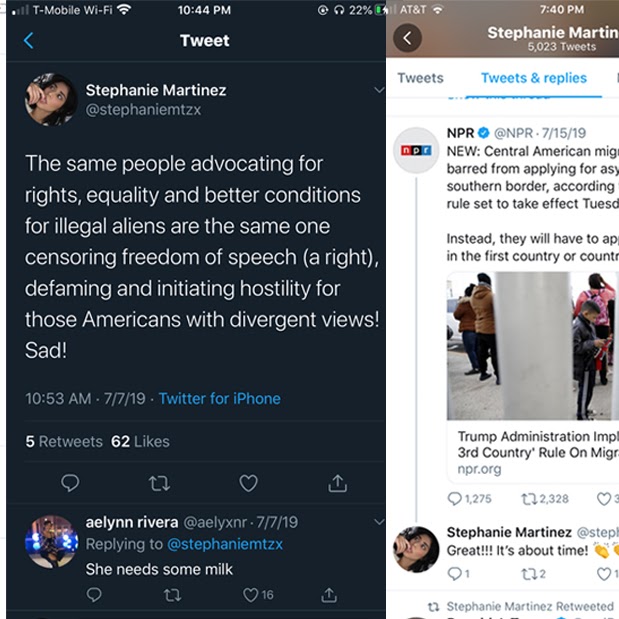
On October 11th, ASLMU Senator Stephanie Martinez was impeached on the grounds that her actions “severely damaged the integrity or authority of ASLMU or the office held by the individual in question.” To further specify the grounds of impeachment, complainant Senator Camille Orozco clarified that the hearing was not a challenge to free speech.
“I would like to remind everyone that this is not a trial regarding freedom of speech, expression, or political affiliation, as those rights are protected in the United States Constitution, as well as the non-discrimination policy in ASLMU’s constitution,” Orozco said. “This hearing is one regarding conduct which has severely damaged the integrity, or authority of ASLMU or the office held by Senator Martinez.”
Challenging Orozco’s reminder, Senator Martinez expressed her belief that the trial was entirely an issue of free speech.
Martinez argues, “Despite what was stated, that this is not about free speech or political identity, I argue that this is not the case. The impeachment case against me was brought forward as a result of the Loyolan article and subsequent petition in response to my creation of the students for Trump Instagram page,”
Called to her defense as a witness, Scott Meyers supported her assertion that this was a free speech issue. “I think a lot of what conservatives stand for is freedom of speech, and I believe that this is entirely a free speech issue,” said Meyers. “I see people being affected or harmed by an opinion.”
And there’s our buzzword: “opinion.”
So what do we make of this argument? Was Martinez impeached for creating distrust between the very students her role as Senator for Diversity and Inclusion is tasked to protect? Or, was Martinez impeached for her “opinion?”
Veronica Backer-Peral of The Loyolan answers this question in a recent article, questioning the constitutional and ethical integrity of the impeachment.
She argues, “Even if you disagree with everything that Senator Martinez believes and stands for, it is evident that she was impeached for tweeting her opinion.”
While Martinez, Backer-Peral, and other critics of the impeachment claim an “opinion” was under politicized scrutiny, I implore us to question the meaning of “opinion” in this context. The opinion in question is not merely an ideological alignment with right-wing politics. The “opinion” being discussed is not an opinion at all. It is a violent, dangerous, and alienating message to the communities Martinez’s role requires she protect.
Martinez was not impeached for an “opinion.” She was impeached for damaging the integrity of ASLMU not by openly supporting “pro-immigration control” - but for supporting violence on the lived realities of our most vulnerable students. These marginalized communities, such as queer folks and undocumented immigrants, need a Senator for Diversity and Inclusion who has their best interest in mind. Martinez’s hateful and violent actions directly contradict this duty.
To retweet “My child will NOT be learning LGBT curriculum” is to deem queer students at LMU as unimportant and not worth hearing or learning from. To retweet this exclusion of LGBT folks is to isolate us, to devalue our lives, and to curate a world without us. That is why Martinez was impeached. We, the student population she is supposed to protect, feel unsafe under her leadership.
To tweet “A close friend of mine works for ICE” is to align herself, and by extension ASLMU, with the endangering of communities of color, the imprisonment of children, and the mutilation of women’s bodies. Martinez’ parents’ legal immigrant status does not absolve her of this. My mother is a legal immigrant too; however, I know that to tweet about a friend in ICE is to support violence against students at LMU.
Martinez was not impeached for her political views. ASLMU’s majority voted to impeach her because she tarnished the integrity and authority of the governance of our student body. As a queer son of an immigrant, I do not trust Martinez. Though she stated that the LGBT community at LMU “would have” her support, I am here to say no.
My human rights are not a political opinion. Neither are the rights of the LMU student body.
Though Martinez was impeached for creating distrust between students and ASLMU, it is imperative that we as a university push back against the insistence on this as an issue of free speech or political affiliation. We can disagree about new logos versus old logos. We cannot disagree about our student communities’ human rights.
This is the opinion of Harrison Hamm, a junior Screenwriting & Women’s and Gender Studies double major from Jackson, TN.


By Erica Riray
In Congresswoman Karen Bass’s speech for LMU’s Constitution Day, she reminded us that college students are not immune to COVID-19. Yet as students return to Los Angeles, many appear to be unfazed by the risks of the current pandemic when throwing parties and large gatherings.
At the time this article was written, LA Public Health reported 279,909 COVID-19 cases in LA County, a number that is increasing by about 1,250 a day. Fatality rates have slowed, but 6,741 people have died from COVID-19 in LA County to date.
Some LMU students who weren’t able to secure on-campus housing still find themselves living close to campus, occupying buildings in Playa Vista and Westchester. In attempts to replicate what is left of the college experience away from the Bluff, groups of friends are quarantining together, attending Zoom lectures in the same rooms and leaning on each other for emotional support that they may not receive back home.
But COVID outbreaks in colleges across the country tell us that the pandemic poses a threat to the fun. Despite strict precautions that mirror those released by LMU in early August, the University of Southern California (USC) experienced a spike in cases, according to USC Chief Student Health Officer Sarah Van Orman. Students have been found throwing parties in off-campus apartments, in one instance causing a COVID-19 outbreak that put over a hundred people in quarantine.
Similarly, California State University, Long Beach (CSULB) reported an outbreak of COVID-19 cases directly related to large gatherings of students on and off campus near the end of September. This outbreak put approximately 328 on-campus residents in quarantine and CSULB has since asked off-campus community members to self-isolate.
USC and CSULB’s neighborhoods are home to Black and Brown communities who are particularly vulnerable to the coronavirus. The Center for Disease Control (CDC) has reported that racial and ethnic minority groups are more likely to contract COVID-19 due to social inequities including access to healthcare, occupation and housing. In addition to facing gentrification and increasing rent, a deadly virus is now brewing in their backyards.
LMU students are capable of quickly catching and spreading COVID-19 to the most vulnerable members of the community in the same way. Black and Brown residents have occupied the neighborhoods surrounding LMU for years. In Westchester, the minority groups listed in the CDC’s report make up 48% of the population. About four miles away in Inglewood, they make up about 70%.
In an October 2020 report, the CDC has concluded that young adults significantly contribute to community transmission of COVID-19. The CDC’s new data confirms that people ages 20-29 make up the highest percentage of COVID-19 cases nationwide, surpassing adults aged 60 and older.
To accommodate public health guidelines, the university has reduced housing occupancy to one student per unit with Resident Directors enforcing housing rules.
Sophomore Cobe Alvarez is currently living alone in an on-campus apartment. His experience has been comfortable and safe since Resident Directors are actively limiting entrance into buildings.
Alvarez expressed that seeing other residents’ social media posts of small kickbacks and gatherings worry him due to how the virus could be spread through these activities.
“I would say I'm more concerned about students doing stuff off campus, [or] students living on campus and going off campus, than I am about [living] on campus specifically,” said Alvarez.
LMU has also promoted safety on and off campus during the pandemic. Over the Labor Day weekend, LMU released a “Protect the Pride” video on social media. Students from Sorority and Fraternity Life (SFL) encouraged students to follow social distancing guidelines. LMU has also been updating their “LMU Together” page and adopting the motto “EIBC,” short for Excellent Infectious Behavior Control.
“[EIBC] encourages students to monitor their behavior, stand six feet apart, wear their masks [and] not gather in large groups of three or more,” explained Amiya Powell-Hodge, interim Assistant Director of Off-Campus Student Life.
Playa Del Oro (PDO), an apartment building minutes from campus, is primarily occupied by LMU students every year given its proximity to campus, and this semester is no different. Sophomore PDO resident Meghan Quadracci reported that the building has been promoting distancing and limiting entrance to shared spaces like the pool. But unlike the residents living on campus, there are no Resident Directors or Public Safety officers to enforce distancing and the number of guests in the apartments.
In an email sent out to LMU’s Service Organization Community (SOC) in September, Center for Service and Action (CSA) Assistant Director for Student Engagement Chelsea Brown reprimanded large gatherings that were allegedly reported and pleaded with students to stop.
“[W]e are only on day 2 of the semester and there have already been reports of students gathering in large groups at houses outside the back gates and in Playa Del Oro,” Brown wrote. “Here’s the thing: please don’t.”
It is unclear if the university has taken any action regarding these specific reports or exactly whom these incidents of gatherings were reported to.
Off-campus residents who hold gatherings may also face consequences from the local government. The LA County Health Officer Order’s Impact on Daily Life explicitly states that “individual and family gatherings or parties of any size aren’t allowed.” LA Mayor Eric Garcetti has also threatened to shut off utilities for those who violate public health orders such as these.
Powell-Hodge explained that LMU has taken a more restorative approach over a punitive one to violations of COVID-19 preventative procedures.
“We are addressing it with care and compassion as we would anything else,” said Powell-Hodge.
If a neighboring member of the community files a complaint, the university writes a report and Off Campus Student Life will follow up with students as needed. There have been no complaints publicly reported by LMU.
University life has changed drastically with the pandemic. LMU has made resources available to students but is not directly policing them. Students are the only ones responsible for their individual decisions.
Powell-Hodge wants to remind students to “consider your values and who you value. This is a time for us to be creative about the way we conceptualize community and we have to do that with every member of our community in mind. That is what’s going to help us return to our campus life.”


LMU Releases Fall 2020 Plans
By Christina Martinez
On July 14, LMU announced its decision to plan for a fall semester with virtual instruction and to significantly reduce the presence of students on campus.
In the school-wide announcement, Provost Thomas Poon cited L.A. County’s surge of COVID-19 cases, updated health and safety protocols, and the recent local and state restrictions as the reason for the university’s decision.
“I am confident that we can provide our signature Catholic, Jesuit, and Marymount education while substantially reducing in-person instruction and lowering on-campus housing density,” Poon wrote on the decision. “The well-being of our students, faculty and staff is our top priority.”
The former LMU Coronavirus site has been rebranded into LMU’s reopening website, which will be “the hub for everything about LMU’s fall 2020 reopening.” It contains the aforementioned announcement and other resources pertaining to the upcoming semester.
Here is a round-up of this week’s main announcements from Provost Poon’s letter, the reopening website, and related documents and communications:
Academics
Most, if not all undergraduate courses will be instructed remotely. Exceptions will be made for some studio and performance courses, seminars, labs, research, and certain independent studies courses.
According to an email from the Office of the Registrar, changes to course information and schedules were completed at the end of the day on July 17.
On July 20, class registration will reopen in PROWL for students who have time conflicts due to the Registrar’s scheduling changes. Registration will reopen to all other students on July 21.
LMU assures that students will have remote access to resources from William H. Hannon Library, the Academic Resource Center, Student Affairs, and Career and Professional Development.
Financial aid
Provost Poon acknowledged the pandemic’s financial burden for many students and their families, and announced that LMU will be “taking new and unprecedented steps to respond to [these] requests and lower [the] overall cost of attendance.”
LMU has approved $6 million in “LMU Covid Tuition Relief Grants” which will be applied to all full-time students’ accounts as $1,000 grants.
This year 85% of undergraduates are receiving financial aid as grants or scholarships. Overall $90.6 million is going to undergraduate students, which is a 20% increase in aid from the 2019-20 school year.
Fees will be adjusted for housing, meal plans, recreation, and parking for students who will have limited or no access to these features.
On July 16 it was announced that late fees for the July 20 tuition payment deadline would be waived and that campus recreation fees would be waived for students who do not receive on-campus housing.
Housing
The announcement’s housing information was posted on the Student Housing website and sent in a follow-up email to students with on-campus housing contracts. The plans announced on June 26 have been readjusted to limit on-campus housing to only 30% of its normal capacity.
Traditional residence halls such as Del Rey North, Del Rey South, Desmond, Doheny, Rosecrans, Whelan and the newly-added Palm North will be closed.
Most suite-style halls, on-campus apartments and university-owned housing will be available, but only one student will be assigned to each bedroom. McKay Hall will be closed and used for COVID-19 isolation and quarantine.
Housing priority will be given to students who are unable to study off-campus or are housing insecure, require accommodations for disabilities and international students currently in the U.S. who do not have off-campus housing. Students who meet the priority criteria must submit a supplemental application on the MyLMU Housing Portal.
Housing assignments will be sent out by July 31. Students who acknowledged the new license agreement by July 6 but do not meet the priority criteria and do not receive an assignment will be placed on a waiting list until it is possible to increase housing capacity.
Student life
In his announcement Provost Poon introduced the motto Excellent Infection Behavior Control (EIBC) which asks LMU students to hold others accountable for their health behavior and to adapt to the pandemic’s new ways of learning and working.
In a document detailing LMU’s COVID-19 policies and practices, all returning students must complete EIBC training online before the start of the semester. Incoming students will learn this training in their ORNT 1000 or ORNT 2000 orientation courses.
On-campus events or meetings for any reason are not allowed and will not be approved. A policy for off-campus gatherings for student organizations and clubs is in the works but has not been finalized nor added to the policy document.
All meetings, regardless of size and whether students are on-campus, must be conducted virtually. Furthermore, any meetings and events that were previously scheduled with Event Services will be canceled by the beginning of the semester.
Students who fail to comply with LMU’s policies and procedures will be reported to the Office of Student Conduct and Community Responsibility (OSCCR).
Campus operations
On-campus operations will be limited. All health restrictions previously announced by LMU will be enforced, such as the face mask and social distancing policies and the use of Lion Health Check for students, faculty, and staff with campus access.
According to LMU’s COVID-19 reopening document the “overall campus workforce” will be decreased to 30% of its usual size. This comes after LMU furloughed 230 staff members due to revenue shortfalls at the end of May.
Occupancy limits will be decreased for all rooms, elevators, and service counters to account for social distancing. Traffic flow in all buildings and rooms on campus have been modified by designating one-way paths and labeling doors as entrances or exits only.
Yellow and black signage will be placed across campus to remind visitors to social distance and to respect the new traffic flow rules.
LMU has announced it will continue to update students in the upcoming weeks through email correspondence and the reopening website.
Three virtual town hall sessions have been announced so that LMU community members can ask questions about the upcoming semester, but students and parents are only invited to one, and the rest are for faculty and staff. The session for students and parents will be held on July 29 at 12 P.M. local time.


Student immigrant rights activist group Resilience has raised over $3,000 in mutual aid to support undocumented students ineligible for the CARES Act grants distributed by the University.
The Department of Education (DOE) stated that CARES Act funds can only be distributed to students “eligible to participate in programs under Section 484 in Title IV of the Higher Education Act [HEA] of 1965.” Eligibility depends on citizenship status, which excludes undocumented students. As such, only students with a documented citizenship status were eligible to receive the $300 CARES Act check sent out by LMU on June 16.
In partnership with ASLMU, Resilience created the CARES Relief Aid Redistribution & Mutual Aid fund to redistribute funds to documented students excluded from the CARES Act.
Resilience president and senior Desiree Diaz expressed her anger for the current United States government’s treatment of all undocumented individuals during the pandemic, not just students.
“[This administration] is callous, cruel, and practically wicked in the way they’ve treated our immigrants, and I think the pandemic allowed them to be that way unabashedly,” said Diaz.
ASLMU Vice President Elsie Mares was also angered by the Department of Education’s actions. When the CARES Acts grants were distributed, she began to consider what the checks really meant for the LMU Community.
“Many students at LMU come from comfortable backgrounds, and haven’t had their financial situations or employment opportunities impacted by the pandemic,” said Mares. “The same can not be said for many people within the undocumented community.”
Mares, along with former ASLMU Vice President Emily Sinsky and other members of Resilience, created the CARES Relief Aid Redistribution & Mutual Aid Fund.
Mares said that she sees the fund as an “opportunity for students to engage in economic solidarity and mutual aid by donating their aid directly to a peer.”
Resilience was founded as “LMU’s immigrant rights activism group and support network,” which supports and advocates for immigrants.
Although not an undocumented student herself, Diaz is proud to stand in solidarity with LMU’s undocumented students.
“It’s beautiful, and full of people who inspire me more than words can capture,” Diaz said of LMU’s undocumented student community. “[They] live a reality in this country I couldn’t fathom the weight of, but they keep fighting. They’re the strongest people I know.”
According to Mares, Resilience’s goal is to raise $6,000 so they can give all of LMU’s undocumented students a $300 grant, an amount equivalent to what qualifying students received from the university’s CARES Act payout. Within 48 hours of announcing the fund, they’ve raised over $3,000.
According to Diaz, all funds raised will be distributed by a trusted LMU faculty member so undocumented students can retrieve their allotment anonymously.
“[It] filled me with so much pride and love for my peers,” Mares said of the fund’s success. “ It is beautiful to see young people sharing their blessings and standing with the undocumented community even in the face of this administration’s consistent displays of xenophobia.”
In the future, Diaz believes LMU should be doing more for undocumented students, and that it should not be the responsibility of students to lead those efforts.
“I do believe LMU cares about our undocumented students, but they don’t exactly follow through on showing it,” Diaz said. “I want them to help organizations like Resilience in educating our students about immigration justice, and I want them to do more than send out emails in solidarity.”
Donations to the CARES Relief Aid Redistribution & Mutual Aid fund can be sent via Venmo to @lmuaid.

|
| PHOTO: MEGAN LORETO |
According to the announcement it is expected that all residence halls and apartments on and off campus will be open “if it is safe and aligns with guidance from public health authorities.” Official guidelines for move-in will be announced once the University makes a decision regarding Fall 2020 housing.
It is unknown whether housing costs will be adjusted due to the planned end of on-campus instruction before Thanksgiving Break.
First-year students will receive a move-in appointment mid-July with a date and time between Aug 26-29 to facilitate social distancing. Guidelines for returning students have yet to be announced.
For all move-ins, students can have no more than two other individuals assist them, and all individuals are required to wear masks and comply with social distancing requirements.
As of June 1, Learning Living Communities (LLCs) and other specialized housing assignments will continue as planned, but they may be re-evaluated based on LMU’s decisions.
Guidelines for the move-out process have yet to be released by the University.
Students may cancel their fall housing assignments by July 28. However, these students must apply for a new assignment if they wish to live on campus in the spring.
For more information, students are advised to email or call the Student Housing office.


Social Icons