


Every year through a different book,the LMU Common Book Program unites the freshman class in a “common experience through the uncommon discoveries in reading.” The program extends further into the LMU community, with the book being added to various syllabi, including the one for my Arts and Culture Journalism class. We read the 2020 selection, “Go Ahead in the Rain: Notes to a Tribe Called Quest” by Hanif Adurraqib and also attended the author’s discussion of the book just days after the election. The Common Book program website summarizes the book perfectly: “Abdurraqib's book follows the path of the American hip-hop group A Tribe Called Quest from the mid-1980s and the early days of hip-hop collectives, through a tumultuous 1990s that was punctuated by significant shifts in the music industry, and to the group's final album in in 2016. Abdurraqib ruminates within the cultural moment of the late 20th century through the lens of black experience.” After attending the talk, I wrote the following review of the book, incorporating the elements of the author discussion.
By Yemaya Williams
“Go Ahead in the Rain: Notes To A Tribe Called Quest,” Abdurraqib’s third book, is deeply personal and poetic. It is exactly what the cover says it is: a love letter to a group, a sound and an era. It is an ode to Black music as it intertwines with Black life. So many genres of music and influential musicians are born out of the communal and systematic struggles that come with being Black in America. Abdurraqib says, “The labor that goes into the hard heat of living is the music.” The roots of jazz music that Abdurraqib excitedly finds embedded in the albums of A Tribe Called Quest, as well as the genre of hip hop that Phife and Q-Tip revolutionize, are genres born out of the necessity for relief amidst a constantly racialized existence.
When speaking about this book over Zoom, just days after the 2020 election, Abdurraqib said, “There is a history that lends to the conditions under which music is created.” Deconstructing the samples inside each Tribe song using his parents’ extensive record collection, Abdurraqib charts a lineage of sound that is undivided from a lineage of shared struggle. The music of A Tribe Called Quest and Abdurraqib’s love-letter of a book become historical artifacts, mapping out the shared memories of Black people across the country. The music’s blending of generations speaks to how we aren’t so far off from where we used to be. A lot of us have grandparents with memories of slavery, parents with memories of the Civil Rights movement and ourselves, with memories of the injustices that came after and that continue to happen.
Abdurraqib said America is reliant on forgetting its own history and that our amnesia is why we are doomed to repeat it. However, through looking at the use of the sample by the Tribe and, how even though it’s gotten harder, the tradition of the sample has continued. It is clear that Black people are not the ones doing the forgetting. During the Zoom talk, Abdurraqib said “music can be a document, even if it’s not speaking directly to the world itself,” and through music, Black history is clearly documented. From the mention of the origins of NWA’s “Fuck the Police” to talking about the CD Man and police brutality, Abdurraqib uses poetic and musical metaphors to show how political and systematic complexities can fit into an album or a mixtape, as well as a book. Further, Abdurraqib demonstrates how these cultural artifacts live on in truth, long after their creation.
“It is also about society’s unseen - the people who exist but may be able to navigate an entire landscape as invisible until some violence or some tragedy deems them less so.” Here, Abdurraqib talks about the Tribe album “The Low-End Theory,” but also the ways in which Black life is experienced in a white society. One of the few places Black faces show up in the world is in the music industry’s racialized genres. Another place is in stories of police brutality. Abdurraqib asks: “What is political in a country that would leave you bleeding on the concrete?” when pulling the reader into the sounds and narratives of “The Low-End Theory.”
Black people telling the stories of their lives is political because of the systematic conditions under which they live. Some individual stories cannot be told without framing it within another larger story. The story of A Tribe Called Quest is contextualized in multiple aspects of Black culture, politics, and youth. All these things that historically connect all Black cultural productions and experiences took many people until 2020 to finally acknowledge and begin to connect the dots. Before, most people entrenched in our white society had never engaged with the topic of systematic racism in depth; they had forgotten their own history. What Abdurraqib reminds us with his book is that Black people will never forget theirs, especially as they continue to live in it.

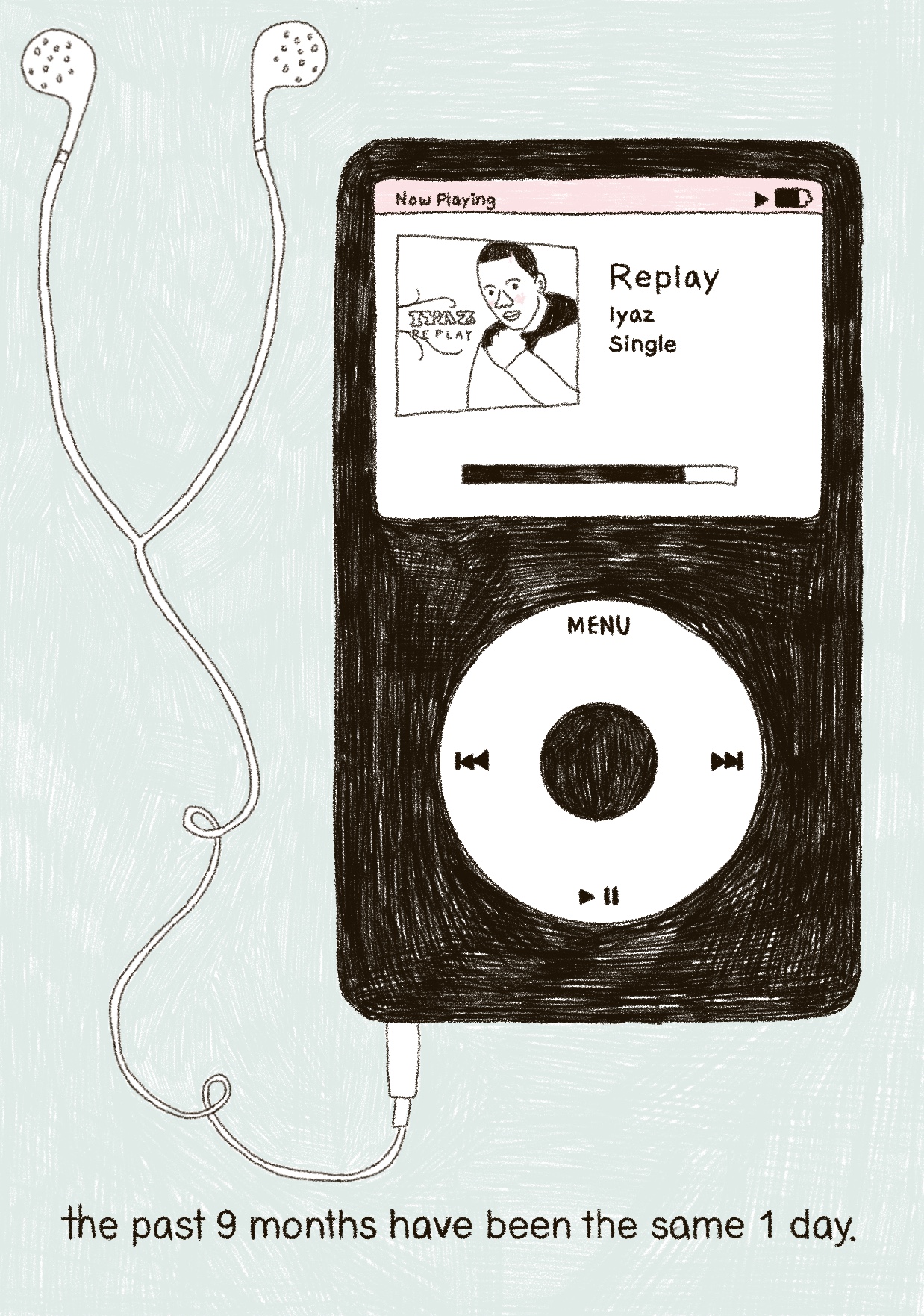


Social media is not a tool for unlearning anti-blackness. There is no meaningful engagement, personal reflection or life application done between reading an infographic and sharing it to your story. But the app is still good for a handful of things like boosting mutual aid campaigns and the ability for Black people to build their own platforms.
Social media and its low-access barrier is an opportunity to expand your perspective. It provides direct ways to support and uplift Black artists and creators who would normally be excluded from their industry. Through Instagram, Black business and Black creators are getting more attention now than they ever have—and they deserve it. Just because you only see white bodies in art museums and only read white writers in school doesn’t mean your personal engagement needs to be so narrow in scope.
A simple follow, like or story share means a lot to people the algorithm doesn’t favor. It’s so easy to do and it expands your worldview in the process. As a Black artist trying to use social to find an artistic community during these times, I’ve gone out of my way to find as many Black creators as possible to follow. Some have bigger platforms and get commissioned by well-known companies while others are just people sharing the art they make in their bedrooms.
I’ve put together a list of these creators so that more people can purposefully widen their scope and so that Black artists can continue gaining the attention and support they deserve.
BLACK ARTISTS AND CREATORS TO FOLLOW ON INSTAGRAM: A SUPER LONG LIST
Smaller Followings:
@aislinn.art
@ajanicreates
@always.underwater
@angryaangel
@anyapaintsil
@ashdujour
@blackandjoyful
@b13ss1ng
@catherinem.a
@cowgirlcandicesart
@e4rthchild
@fatherjawsh
@joliebrownell
@kae_elms
@kailuvv
@kikesaaa
@kthru.12
@livingartdisplay
@lofij333
@marsinterlude
@miayaisnotmyname
@niaanntart
@niggawitagrape
@n.yallah
@nzuridraws
@pandagwad
@sacralrise
@sickandtiredblackartist
@smithleyville
@softcntered
@soulkianna
@soulkitti
@tanyanwilson
@tiara.francois
@trash.ketchumm
@valkammeron
Bigger Followings:
@alanahunta
@artbybrix3
@arthoecollective
@ayy.bee
@barryyusufu
@blackartistspace
@cliffordprinceking
@cosmocouch
@curtia
@danascruggs
@denzelgolatt
@duendita
@erezyn
@exquisite_eye
@ggggrimes
@giannilee
@idealblackfemale
@jayversay
@johnmadu_art
@kieraplease
@lilblackgoat
@loharrisart
@monicagreatgal
@mrcheyl
@mythsooka
@renellaice
@rociomarie_
@sageaflocka
@shakka.d.badmon
@shoplhp
@supportblackart
@tylersphotos
@venusroots
@viteloi
@730t


Towards the beginning of quarantine, Agency commissioned the LMU community to tell us what a day in their lives looked like under the given circumstances. We collected journal entries, anxiety and creativity tips and the editorial board took still life photographs. Before we switched our full focus to the Black Lives Matter movement and support of the LMU black community, my contribution to “A Day in the Life” was an article I titled “I Love My Cat.” The opening paragraph was as follows:
(I recommend coming here after COVID times even if you don’t want to adopt because all of the dogs have free reign to walk around the store)
*Note that shelters and rescue houses have different adoption fees. These fees go towards the veterinary care and other costs, meaning you adopt an animal already microchipped, up to date on vaccines, and spayed or neutered. I paid $20 to rescue Mango from NKLA because it was a shelter but Kiwi was $165 because she was from a rescue house and was being fostered. Fees vary depending on where you go and where you live but it’s all worth it to support these organizations and it covers a lot of vet care.



Social Icons