
 |
| Photo: Nick Canchola |
By Nick Canchola
So, we finally did it. Recreational marijuana is now legal in Arizona and a couple of other states. But what does this really mean?
First, let’s take a look at the history of weed-related ballots in AZ. Way back in 2010, Arizonans passed Proposition 203, the Arizona Medical Marijuana Initiative. This bill narrowly passed, with a 50.1 to 49.9% split, and faced a slew of legal issues in the following years. Sen. Jan Brewer filed a lawsuit against Proposition 207 that was later dropped, looking to clarify the legality of marijuana. Former Arizona State Representative Amanda Reeve also proposed her own house bill, seeking to make it illegal “to lawfully possess or use marijuana on the campus of any public university, college, community college, or post-secondary educationa institution.” However, this was struck down as unconstitutional by the Arizona Supreme Court.
In 2016, the Arizona Marijuana Legalization Initiative, an initiative statute seeking legalization of recreational marijuana, was narrowly defeated by 3 points. The Smart and Safe Act, a similar but much more robust proposition, was finally approved in Arizona’s most recent 2020 elections. The passing of Proposition 207 resulted in the legalization of recreational marijuana for those 21 years and older. Additionally, the proposition assigned all marijuana regulation to the Arizona Department of Health Services (DHS) and created a 16% tax on all marijuana sales divided between the following: community college districts, municipal police, sheriff and fire departments, fire districts, the state's Highway User Revenue Fund, and a new Justice Reinvestment Fund.
Four years ago, Proposition 205 mistakenly had no mention of criminal justice reform. Regarding those impacted by the justice system, today’s Proposition 207 now allows anyone convicted of certain marijuana-related crimes—possession, consumption, cultivation, and transportation—to petition the expungement of their criminal record starting on July 12, 2021.
While this is all great, there are a couple of areas where Proposition 207 falls short.
The economic aspects of Proposition 207 still enable the monopolization of largely white-owned marijuana distributors. In an attempt to combat this, Proposition 207 also requires the state to issue 26 licenses under a social equity ownership program. This social equity ownership program’s purpose is to aid owners from “communities disproportionately impacted by the enforcement of previous marijuana laws.” While most other states have similar programs to address the racial inequities around marijuana, do these programs really promote real change? Marijuana Business Daily explains the flaws in these programs, “And even cities that have awarded social equity licenses are still lacking the capital support those businesses need to succeed in a hypercompetitive market.” The root of inequality in the Marijuana industry isn’t due to a lack of licenses, but rather, a lack of business and legal resources for minority-owners to compete for long-term, against more established marijuana dispensaries.
The aspects of Proposition 207 that address criminal reform could also be stronger. In 2019, the percentage of marijuana-related prosecutions in Arizona was at 22%, which ranked second in all drug-related prosecutions in the state. Additionally, Arizona had the 4th largest incarceration rate at 585 per 100,000 people. With this in mind, Proposition 207 only distributes 10% of the revenue generated from tax to the Justice Reinvestment Fund. In a state where incarceration is a massive issue, is 10% enough? Upon further inspection, expunging marijuana records might be more difficult than perceived. 12 News writes that expungement only applies to convictions with less than an ounce. But in many cases, “court records don’t show how much marijuana someone actually had.” Sadly, this tiny detail could prevent many Arizonans from clearing their records if they don’t have sufficient legal resources or enough evidence proving they were arrested with an ounce or less of marijuana.
When will Arizona citizens be able to purchase recreational weed products?
Steve White, the CEO of Tempe-based cannabis company Harvest Health and Recreation, told The Arizona Republic that business licenses will most likely be issued by late March or early April 2021.
While the Smart and Safe Act is a step in the right direction towards ending the war on drugs, there is still a lot of progress to be made. Chandler Smith from the Arizona State Law Journal points out that “[AZ] DHS has not announced the details and requirements of the social equity ownership program,” so there's still time to pressure the state to make policy adjustments. Smith suggests a “mentorship program with local attorneys who want to assist social equity ownership license holders with regulatory compliance.” This mentorship program would provide tax incentives for real estate businesses, give access to financial services and human resource training, and establish rules that prevent fraud as similar laws are passed around the country.
The fight for cannabis rights is far from over. And even when left-leaning laws and propositions are passed that seem progressive, continue investigating and questioning all policies.


Illustration: Jenica Rose Garcia
Breonna Taylor deserved better
By Isa Coty
On Nov. 13, her first day in Congress, House Representative Cori Bush wore a face mask with Breonna Taylor’s name on it. Her Republican colleagues assumed the name on Bush’s mask was her own and referred to her as Breonna.
“It hurts,” Bush tweeted. “But I’m glad they’ll come to know her name & story because of my presence here.”
It has been 253 days since Breonna Taylor was murdered. After hundreds of days of protesters yelling her name in the streets, the trial for the police officers that murdered her was held, but they were not convicted of anything other than a wanton endangerment charge for firing shots that entered the apartment of a white pregnant neighbor. Due to the intense memeification of Breonna Taylor’s name on social media, many people can collectively remember her image, but Breonna herself was still forgotten by the justice system.
Breonna was murdered in her Louisville apartment by undercover police on March 13. Kenneth Walker, Breonna’s boyfriend, claims he did not hear the police knock, though the officers have testified that they announced themselves after learning that Breonna was a soft target. The officers believed there was no need for the no-knock warrant that they had previously obtained. Kenneth Walker fired a warning shot upon hearing them enter because he was worried that Breonna’s ex-boyfriend, Jamarcus Glover, had intruded. Instead, officers Brett Hankison, Jonathan Mattingly, and Myles Cosgrove returned thirty-two shots into the apartment.
Kentucky Attorney General Daniel Cameron took six months to charge only Brett Hankison with wanton endangerment because Breonna was murdered in a way that was not illegal. The minimal charge is in spite of the fact that the state acknowledged that police misconduct occurred when Breonna’s family won a $12 million dollar settlement.
According to the “Breonna Taylor was Essential” petition and Ben Crum, the attorney for Breonna Taylor’s family, the police officers who murdered Breonna should have been charged with wanton murder instead of with wanton endangerment. There has been vocal public disapproval of what ‘justice’ has been achieved for Breonna Taylor and the rate at which it happened.
Breonna’s name was everywhere, plastered all over social media once her case became public. Her name was spread widely due to #SayHerName, a movement started by activist Kimberle Crenshaw that strives to make the public aware of Black women who are killed by police brutality. On social media, the call to say Breonna’s name as much as possible turned into a trend. Users would pair a quirky picture on Twitter or a cute selfie with the caption, “Arrest the cops who killed Breonna Taylor.” Her name, her story, and her image were all commercialized while her worth was diminished.
When I think about Breonna, I’m reminded of a conversation I had with my roommate Mick about how the belief that justice would be served could only come from a non-Black perspective of the justice system. He said: “Despite all these voices calling for justice, this system is like this unmovable mountain.”
As a Black woman, I especially hurt for Breonna Tayor’s family. As a Black woman, I am Breonna. As a Black woman, I know that if I were murdered by police, I too would not get justice and my name would not be known if it weren’t for movements like #SayHerName.
Breonna Taylor’s murder was not taken seriously because Black women don’t matter to people like the Republicans who mistook Cori Bush for Breonna. To them, we are all the same. The way we get justice for Breonna now is by never forgetting her, as Bush said in her initial tweet:
“Breonna must be central to our work in Congress.”
This is the opinion of Isa Coty, a junior screenwriting major from Atlanta, GA.

An Herbicide-Free LMU is Safe, Sustainable, and Sensible 
Photo via Herbicide-Free LMU
By Emma Dax, Rose Williamson
As Lions finish classes this semester, our return to campus remains highly anticipated, whether it be in spring or next fall. However, this begs the question: what do we want campus to be like when we come back? As co-fellows of the Herbicide-Free Campus movement at LMU, we know a transition toward a campus free from herbicides is not only possible but already in the works for our return.
In an op-ed published by The Loyolan, “What Would an Herbicide-Free Campus Look Like?,” the author, Cristobal Spielmann, gives his opinion on the issue of herbicides on LMU’s campus and reviews our Herbicide-Free Campus (HFC) Campaign. Citing our goals for creating a more safe and sensible campus, Spielmann writes that going herbicide-free has both environmental and economic incentives. While we are grateful to have our campaign highlighted, our conclusions differ from those of Spielmann. Though we agree that dialogue around herbicides at LMU is important, we find that the transition to a more organic campus is not only safer, sensible, and more sustainable—it is achievable.
Spielmann argues that for LMU to transition to an herbicide-free campus, the university “would have to conduct multiple studies, sampling the LMU population for health effects from herbicide use to see if there are any negative health effects.” Such a study is unnecessary. Students already receive email notices from Facilities Management notifying them of when the department will be spraying for weeds and pests. The department also advises students to close their windows if they live on the first floor of an on-campus living space to keep harmful chemicals from entering their dorms, given how there are known connections between herbicides and human health conditions like Alzheimer’s and Parkinson’s diseases, diabetes, and several forms of cancer. These notices suggest that the university is well aware of herbicides’ negative health effects, so there is no need to conduct a study. We have also been in contact with university groundskeeping, who are in favor of an herbicide-free campus and need student support to officially begin the transition.

The student’s and housing services manager’s names have been blocked out for privacy, as well as the Student Housing Office phone number.
Further, Spielmann’s insistence on on-campus studies goes against the Precautionary Principle, a philosophy long-held by public health and environmental officials which states that “when an activity raises threats of harm to human health or the environment, precautionary measures should be taken even if some cause-and-effect relationships are not fully established scientifically.” This principle places the burden of proof on those proposing potentially dangerous tasks—legally, the herbicide and pesticide manufacturers, not the consumers. Spielmann’s call for a campus-wide study places responsibility on the university to find cause-and-effect relationships even though the link between herbicide use and human and environmental health degradation is already understood by the scientific community.
Conducting a study based solely on LMU students and staff would be inefficient and risks wasting crucial time that could be spent actively transitioning campus to an herbicide-free, organic model. Spielmann’s suggestion implies that going herbicide-free is a utopian, unrealistic desire which would take the campus many years. In reality, the herbicide-free movement is already in full swing at other universities. Students at the University of California, Berkeley, were able to rid their campus of glyphosate, the harmful chemical found in many synthetic herbicides, just two years after the start of their Herbicide-Free campaign, and we have an opportunity to do the same at our own campus sooner than we think.
Spielmann concludes his article with a call for an active student body on the issue of herbicide use. He writes, “once the LMU community gets more physical and the campus can reopen to a more active student body, a needed conversation between students and the University has to be had…”. Our first ten weeks of the semester as co-fellows of Herbicide-Free Campus, along with the Loyolan publishing a piece on the topic, have proven that there already is student engagement with this issue. HFC’s partnering with groundskeeping thus far proves that the university is both open to this change and ready for student guidance to support this transition regardless of students’ physical presence on campus.
With herbicide-free campaigns existing at thirteen other campuses around the country, the question is not what would an herbicide-free campus look like? But rather will you be there to join us?

Photo via Herbicide-Free LMU

by Harrison Hamm
As a queer, biracial son of a Filipina immigrant, the rights of myself and those I love are frequently challenged by so-called “political opinions.” This is now happening at LMU.
The “political opinions” I reference are not merely sociopolitical or economic ideologies belonging to either the right or left. Rather, I use the term “political opinions” in quotes to identify violently prejudiced beliefs dangerously justified through political rhetoric (i.e. anti-LGBTQ rights, pro-immigration control).
Anti-LGBTQ rights or pro-immigration control stances are not simple opinions, devoid of tangible impacts on bodies. In fact, these beliefs intensely impact bodies, lives, and communities of human beings. It is easy to say you support “pro-border security.” It is less easy to say you support “incarcerating children and forcibly sterilizing women.” Through rhetorical coding, the serious and real actions that follow “political opinions” are too often overlooked. We cannot overlook these here on the Bluff, especially now.
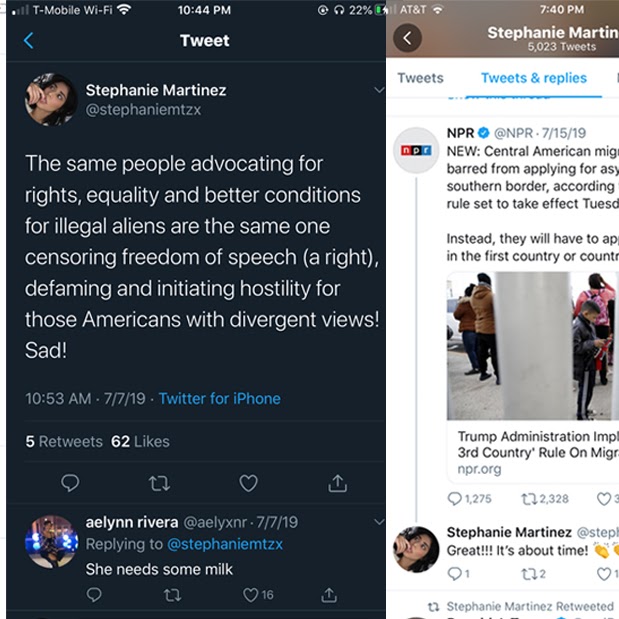
On October 11th, ASLMU Senator Stephanie Martinez was impeached on the grounds that her actions “severely damaged the integrity or authority of ASLMU or the office held by the individual in question.” To further specify the grounds of impeachment, complainant Senator Camille Orozco clarified that the hearing was not a challenge to free speech.
“I would like to remind everyone that this is not a trial regarding freedom of speech, expression, or political affiliation, as those rights are protected in the United States Constitution, as well as the non-discrimination policy in ASLMU’s constitution,” Orozco said. “This hearing is one regarding conduct which has severely damaged the integrity, or authority of ASLMU or the office held by Senator Martinez.”
Challenging Orozco’s reminder, Senator Martinez expressed her belief that the trial was entirely an issue of free speech.
Martinez argues, “Despite what was stated, that this is not about free speech or political identity, I argue that this is not the case. The impeachment case against me was brought forward as a result of the Loyolan article and subsequent petition in response to my creation of the students for Trump Instagram page,”
Called to her defense as a witness, Scott Meyers supported her assertion that this was a free speech issue. “I think a lot of what conservatives stand for is freedom of speech, and I believe that this is entirely a free speech issue,” said Meyers. “I see people being affected or harmed by an opinion.”
And there’s our buzzword: “opinion.”
So what do we make of this argument? Was Martinez impeached for creating distrust between the very students her role as Senator for Diversity and Inclusion is tasked to protect? Or, was Martinez impeached for her “opinion?”
Veronica Backer-Peral of The Loyolan answers this question in a recent article, questioning the constitutional and ethical integrity of the impeachment.
She argues, “Even if you disagree with everything that Senator Martinez believes and stands for, it is evident that she was impeached for tweeting her opinion.”
While Martinez, Backer-Peral, and other critics of the impeachment claim an “opinion” was under politicized scrutiny, I implore us to question the meaning of “opinion” in this context. The opinion in question is not merely an ideological alignment with right-wing politics. The “opinion” being discussed is not an opinion at all. It is a violent, dangerous, and alienating message to the communities Martinez’s role requires she protect.
Martinez was not impeached for an “opinion.” She was impeached for damaging the integrity of ASLMU not by openly supporting “pro-immigration control” - but for supporting violence on the lived realities of our most vulnerable students. These marginalized communities, such as queer folks and undocumented immigrants, need a Senator for Diversity and Inclusion who has their best interest in mind. Martinez’s hateful and violent actions directly contradict this duty.
To retweet “My child will NOT be learning LGBT curriculum” is to deem queer students at LMU as unimportant and not worth hearing or learning from. To retweet this exclusion of LGBT folks is to isolate us, to devalue our lives, and to curate a world without us. That is why Martinez was impeached. We, the student population she is supposed to protect, feel unsafe under her leadership.
To tweet “A close friend of mine works for ICE” is to align herself, and by extension ASLMU, with the endangering of communities of color, the imprisonment of children, and the mutilation of women’s bodies. Martinez’ parents’ legal immigrant status does not absolve her of this. My mother is a legal immigrant too; however, I know that to tweet about a friend in ICE is to support violence against students at LMU.
Martinez was not impeached for her political views. ASLMU’s majority voted to impeach her because she tarnished the integrity and authority of the governance of our student body. As a queer son of an immigrant, I do not trust Martinez. Though she stated that the LGBT community at LMU “would have” her support, I am here to say no.
My human rights are not a political opinion. Neither are the rights of the LMU student body.
Though Martinez was impeached for creating distrust between students and ASLMU, it is imperative that we as a university push back against the insistence on this as an issue of free speech or political affiliation. We can disagree about new logos versus old logos. We cannot disagree about our student communities’ human rights.
This is the opinion of Harrison Hamm, a junior Screenwriting & Women’s and Gender Studies double major from Jackson, TN.


Photo: Kelly Hebestreit
By Jack Palen
Should every adult in the United States vote? America’s answer to that question is and has historically been “hell, no.” The earliest American elections were restricted to land-owning white men, making voter suppression one of America’s longest-standing traditions.
News flash: seven of the 17 Amendments to the U.S. Constitution address increasing accessibility to the polls. How sad is it that the document guiding this country had to be edited seven times to let folks vote – and still it does not do enough. The 13th, 14th and 15th amendments really did not even enfranchise Black men fully, and if you believe that the 19th Amendment enfranchised all women in this country, then Native American, Asian, and Black women would like a word.
To this day, the Constitution does not explicitly give every American adult the right to vote and some state laws bar large swathes of the public from the polls. Legal residents cannot vote. Those with felony charges cannot vote. Our incarcerated population cannot vote. Those without permanent addresses cannot vote. These demographics represent millions of people who live in a democracy with which they cannot engage.
But voter suppression is not just sweeping, codified law prohibiting folks from voting, it also encompasses superfluous procedures, legal or illegal, that distance voters from the ballot box. The act of voting is not necessarily difficult, it is deliberately made that way by those in office. If the U.S. values democracy as much as it boasts, voting would be the most convenient thing in the world. Sadly, voter suppression is as American as apple pie. It is a story that is far from over: at least one of the two major American political parties relies on the suppression of votes to win elections.
Millions of Americans have their vote suppressed each election cycle, perhaps without even realizing it. You are probably one of them.
Voter Suppression is a Tool of White Supremacy
Following the Civil War, more than half a million Black men became voters, and governments in the South reacted, as healthy democracies do, to these changes to the electorate. In Mississippi, two Black U.S. senators were sent to Washington and in 1868, South Carolina’s legislature was majority Black. Before non-white voters were enfranchised, the South had never seen this. When the Reconstruction-era federal occupation ended in 1877, white supremacists became more confident and active in suppressing non-white votes. Once white Southerners retook control of state legislatures, the laws once again began to change.
New federal Constitutional amendments prevented white southerners from barring non-white voters outright, so they instead chose to make it much more difficult for non-white people. On top of extralegal violence from groups like the KKK, states implemented poll taxes requiring payment from voters before casting a ballot, which newly emancipated citizens could not afford. Arbitrary literacy tests were also implemented widely. In Mississippi, non-white voters were made to read sections of the state constitution to the clerk before entering, and often also had to explain its meaning. The voter’s worthiness of casting a ballot was left up to the white clerk.
Further, southern states codified “grandfather clauses” that barred from the polls anyone whose grandfathers were not able to vote before the Civil War, effectively blocking all but white voters. In Mississippi, post-war voter suppression brought Black male voter participation rates from above 90% to under 6%, rates similar to other southern states. These practices continued through the Jim Crow era in conjunction with increased political intimidation and violence.
Vote for Those Who Can’t
The Voting Rights Act of 1965 (VRA) sought to protect the rights guaranteed by the 14th and 15th Amendments, ending racial disenfranchisement and holding states accountable for their historic discrimination. The passage of the law brought a huge increase in non-white voter registration, and jurisdictions had to pass a federal “test” before they could pass voter and electoral laws. The Supreme Court struck down parts of the VRA in 2013 and diluted the federal government’s power to provide election oversight. Not only did the decision halt some progress of the VRA, it opened the door for states to continue legally suppressing voters.
Convoluted voting information, voter ID laws, voter roll purges, inaccessible polling sites, and absentee hurdles are the modern tools that those in power use to ensure you and other Americans cannot vote them out of office. These are only distractions, extra hurdles to jump through without justification. Most suppressed demographics lean left, namely people of color, which might explain the (mostly) Republican tendency to sabotage elections.
Many would agree that Stacey Abrams, the first Black female gubernatorial candidate for a major political party in U.S. history, would-be governor of Georgia if Brian Kemp, then secretary of state, had not removed several hundred thousand voters from the registration list and blocked 50,000 others from registering. Atlanta-based civil rights advocate Joe Beasely, called it what it was, saying, “Kemp has abused his power to purge the voter rolls […] of Black and brown people.” When Georgians recently attempted to vote in the 2020 primaries, many were met with faulty voting machines and long lines. State officials simply blamed poll clerks, because it’s easier to blame logistical failures rather than admit to dismantling a democratic state.
In 2018, voting rights advocate Theryn Bond rode Memphis public transportation from her home to her polling site to show the Tennessee election commission how burdensome voting can be for individuals when polling sites are not properly placed. Bond’s round-trip took six hours. Transportation needs and time commitments can determine whether an individual can vote, and it's a more difficult decision for low-income voters, who may need a ride or time off work. Why do Republicans target low-income voters in this way? Consider for a moment that Donald Trump lost to Hillary Clinton in every subsection of voters making under $50,000 per year.
For many, election day requires months of planning and preparation. For Louisiana residents, it is essential to register and request absentee ballots a full month before election day. This is difficult for those who may not have the bandwidth to constantly be worrying about being prepared to vote. And when you think it can’t get worse, know that Louisiana has made Congressional and Presidential general elections fall on two separate days, with their own registration guidelines. Why?
Republicans are getting so good at suppressing votes that they should get paid to do it. Wait—they do. Voter suppression is not only a part of the job, but it is also an essential Republican strategy. Rep. Glenn Grothman (R-WI) said in 2016, "Clinton is about the weakest candidate the Democrats have ever put up [...] we have photo ID [laws], and I think photo ID is going to make a little bit of a difference..." Great job, Rep. Grothman! No shit. Justin Clark, a senior advisor to Trump’s reelection campaign, said last December, “traditionally it’s always been Republicans suppressing votes in places [...] that’s what you’re going to see in 2020. It’s going to be a much bigger program, a much more aggressive program, a much better-funded program.” Folks, this is terrifying.
If you are a young student voting in an election in a red state, there is a solid chance that your elected officials do not want you to be able to vote. Suppression like this inhibits state and federal governments from properly reflecting the will of the electorate. This should scare us. After all, if you do not see yourself in the government, how invested can one expect you to be?
Wait—Is my Vote Being Suppressed?
Surprise! It is likely that you face unnecessary barriers to voting. To answer this better, let’s look at some key questions we can ask ourselves to see who modern voter suppression might affect and what it looks like.
Is Election Day confusing or convoluted?
Let's be clear, if a state government wanted to make voting easy, it could and would. Recall the Louisiana example, where presidential and congressional elections are on two separate days. This effectively doubles the amount of labor a voter must take on in order to vote. Holding federal elections on one day and making that day a holiday could make voting simpler. What does your state do?
Are multilingual voter registration forms available?
If you live in the U.S., your state’s secretary of state is the person in charge of elections. Is their site clear and available in several languages? What about registration forms? In 2008, the Iowa Supreme Court allowed the then-secretary of state to only produce English language registration forms. As a result, eligible voters in Iowa who did not speak English could not easily register and did not vote. When information is confusing, only online, or only in English, potential voters might be unable to meet the requirements to vote.
Does your state have a Voter ID law in place?
Most likely. A total of 36 states have some sort of law in place which requires state-sanctioned identification in order for an individual to vote. Voter ID laws are, in many ways, the reincarnation of poll taxes, since most forms of state-sanctioned IDs cost money to obtain. Voting should be completely free, but many still have to spend money to vote. How does your state handle identification? Will you be affected? How much money does one need to spend in order to be able to use their voice in this country?
Are polling sites accessible and efficient?
Studies by the Election Administration and Voting Survey and the U.S. Census Bureau show that counties with large minority populations are hit hardest by ill-placed and under-staffed polling sites. In 2018, urban centers of large metropolitan areas had especially few poll workers per active voter and faced shutdowns of polling sites at rates greater than more affluent areas.
Even if one makes it to a polling site, outdated machines and overworked clerks frequently result in long waits. If individuals have other obligations, the opportunity cost of voting becomes too great. Is your state election system receiving the funding required to be efficient, accessible, and convenient?
What does registering and voting look like in your state?
If your state’s registration deadlines vastly precede election day, your state is suppressing potential votes. In Alaska, for example, you have to be registered and ready to vote a full month before election day. In Vermont, alternatively, you are able to register and vote on election day itself. When states make election day a multi-day, multi-faceted ordeal, it puts an undue burden on those who do not have the privilege and energy to keep up with information and preparation. When states allow for individuals to register and vote at polling places on election day, it ensures that the door to voting is open for those who might have fallen behind in preparation.
After the 2018 elections, Arizona changed its laws to require a sworn affidavit and a legal ID in order to vote after election day, even if the state is still counting absentee ballots. Without Googling it, I literally could not even tell you where one would obtain a sworn affidavit. Why would a government do this?
Can young people vote easily?
For years, Austin Community College in Austin, Texas, has used its own funds to host early-voting sites on nine of its eleven campuses, and in 2018 those sites logged 14,000 votes. Last year, the Republican-led state legislature prohibited the event, outlawing polling sites that do not stay open for the entire early-voting period. Students lean blue, which might explain why Republican states cringe at the fact that students are turning out in record numbers. In 2018, 40.3% of all American students voted more than double the rate of the 2014 midterms, a trend that is likely to continue.
Many states do not incentivize voting for college students. In Tennessee an individual can use a firearm registration card to vote, but not an in-state University ID. Out-of-state students may also have to have their absentee ballots stamped by a notary. I can’t even tell you where my closest notary is.
Does your state purge voter rolls?
This is no joke. Roll purges swing elections and affect people directly. Many states literally take registered people off of the registration list, forcing individuals to register again if they skip an election. Not only does this require additional labor to vote, it especially affects those who are unable to easily vote or register. Imagine missing one election and having to redo the already laborious process. After Brian Kemp purged scores of voters from the Georgia roll in 2017, many voters were caught off guard. James Baiye II, a Georgia resident, was excited to vote for Ms. Abrams in the state gubernatorial race, but when he got to the polls he was turned away. He can thank Brian Kemp for that.
Are my state’s districts oddly shaped?
Check out what your state’s congressional districts look like on a map: are they oddly shaped, dipping through cities and rural areas in seemingly arbitrary ways? These districts may have been shaped this way to manipulate the voice of the electorate. This is called gerrymandering, a tactic used to sway congressional races so states send redder or bluer delegations to the U.S. Congress. Your state may do this.
Can my neighbors with disabilities vote easily?
Probably not. For many of the 35 million voting-age Americans with disabilities, voting is an ordeal. According to a 2018 report by the Government Accountability Office, almost two-thirds of the 137 inspected polling places had at least one impediment to people with disabilities on election day in 2016. Polling sites must follow ADA regulations like any other establishment. Does your state take it seriously?
This is Bullshit. What Can I do?
Say “screw you, I am voting anyway,” and make sure no obstacles keep you from the polls. Included in this document is a spreadsheet of relevant dates and deadlines for each state. Check out which dates you need to be aware of, and always check state websites for information too. If you are planning to vote in-person, plan ahead to prepare for travel time, getting out of work, or taking care of obligations so you have time to go to the polls. Reach out to friends, plan carpools, make it a party.
Our generation has had enough. Once we are registered and ready to go, let’s not vote for people who will work to suppress our friends and family. If you do not agree with your state’s approach to elections, let your elected officials know. Your secretary of state is likely the one who leads your state’s elections. Reach out to them to demand accountability and reform, and let these electoral issues inform your vote.
Emma Goldman once said, “If voting changed anything, they'd make it illegal.” She’s right, and for many in the United States, voting is and has been illegal. Voting is essential to our republic, and vigilance is required to protect that right. Today, incarcerated people are systematically disenfranchised, and even after the completion of their sentences, many lose their voting rights for life. Many Americans without permanent addresses, including over half a million Americans experiencing homelessness, cannot vote. Is this truly right?
The election system must work for everyone and we must understand how access, or lack thereof, is strangling our republic. This November, take initiative, register, and vote, if not for yourself, then for those who cannot.
Other Resources


Social Icons